



What's Happening?
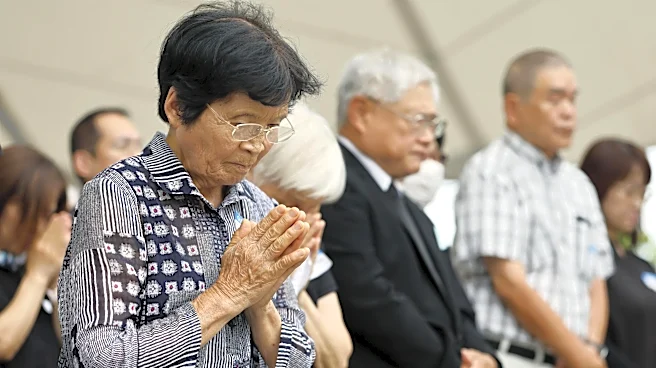
On the 81st anniversary of the atomic bombing of Nagasaki, a peace ceremony was held to honor the victims and promote nuclear disarmament. The event, attended by Prime Minister Sanae Takaichi and representatives from 98 countries, included a moment of silence
at 11:02 a.m., the time the bomb exploded in 1945. Nagasaki Mayor Suzuki Shiro delivered a peace declaration, emphasizing the incompatibility of nuclear weapons with humanity and urging empathy and understanding to prevent future conflicts. Survivors, known as hibakusha, continue to advocate for peace, sharing their experiences to highlight the devastating impact of nuclear warfare.
Why It's Important?
The ceremony underscores the ongoing global debate over nuclear weapons and the importance of disarmament. Mayor Suzuki's speech reflects a strong stance against nuclear deterrence, calling it a dangerous and fragile concept. The event highlights Japan's unique position as the only country to have suffered atomic bombings and its responsibility to lead efforts towards a nuclear-free world. The presence of international representatives signifies global interest in nuclear disarmament and the need for collaborative efforts to prevent future nuclear conflicts.
What's Next?
Japan's government faces pressure to uphold its non-nuclear principles while addressing security concerns. The upcoming Treaty on the Prohibition of Nuclear Weapons review conference will be a critical platform for Japan to assert its commitment to disarmament. The government must balance its historical experiences with current geopolitical realities, particularly as tensions rise globally. The continued advocacy by hibakusha and peace activists will play a crucial role in shaping Japan's policies and international stance on nuclear weapons.
Beyond the Headlines
The aging population of hibakusha presents a challenge in preserving their testimonies and ensuring that future generations understand the consequences of nuclear warfare. Efforts to document and share their stories are vital for maintaining the momentum towards disarmament. The cultural and ethical implications of nuclear weapons continue to resonate, highlighting the need for empathy and understanding in international relations.