







What's Happening?
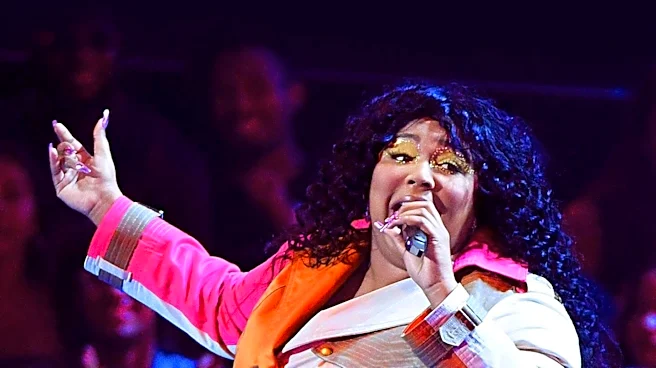
Singer, rapper, and classically trained flutist Lizzo recently played a 200-year-old crystal flute belonging to former U.S. President James Madison, an instrument from the collection of the Library of Congress. The event, initiated by Librarian of Congress Dr.
Carla Hayden, aimed to connect a new generation with the country's cultural heritage. Lizzo first visited the Library to try out various flutes, including Madison's, and later performed with it on stage during a concert in Washington D.C. This act generated significant public attention, with the Library of Congress highlighting it as a moment to showcase their holdings to a broader audience. The performance involved careful handling and security protocols for the valuable historical artifact. Lizzo, born Melissa Viviane Jefferson, has a background in classical flute performance, having studied music at the University of Houston before pursuing a career in popular music.
Why It's Important?
Lizzo's performance with James Madison's flute is important because it ignited a broader conversation about cultural heritage, historical interpretation, and representation in the United States. The event, while celebrated by many as a bridge between historical artifacts and contemporary culture, also drew criticism from some who viewed it as disrespectful. This polarized reaction underscores ongoing debates about how historical figures and their legacies, particularly those tied to slavery like Madison, are presented and engaged with in modern society. The Library of Congress's initiative to make its collections accessible to diverse audiences through figures like Lizzo highlights an evolving approach to public engagement with national treasures. It also brings to the forefront discussions about the role of artists in recontextualizing history and challenging traditional narratives, particularly concerning race and gender in American culture.
What's Next?
The Library of Congress may continue to explore innovative ways to engage the public with its vast collections, potentially inviting other contemporary artists or public figures to interact with historical artifacts. This event could serve as a precedent for future collaborations aimed at broadening accessibility and relevance. On the other hand, the controversy surrounding Lizzo's performance might lead to increased scrutiny or debate regarding the protocols for handling and presenting historical items, especially those with complex historical associations. Discussions about the intersection of historical preservation, cultural representation, and artistic expression are likely to persist, influencing how institutions approach public outreach and education. The incident also highlights the ongoing cultural dialogue in the U.S. about re-evaluating historical figures and their relevance in a diverse society.
Beyond the Headlines
Beyond the immediate reactions, Lizzo's interaction with Madison's flute touches upon deeper implications concerning the ownership and interpretation of history. The act of a Black female artist playing an instrument owned by a Founding Father who was also a slaveholder implicitly challenges traditional power structures and historical narratives. It prompts a re-examination of who gets to interact with and interpret historical artifacts, and whose stories are prioritized in national memory. This event also highlights the persistent issue of racial and gender representation in cultural institutions and the arts. The backlash Lizzo received from some quarters underscores the discomfort many feel when historical symbols are recontextualized by figures who challenge conventional norms, revealing underlying tensions about race, class, and cultural authority in American society. It serves as a powerful symbol of cultural reclamation and the ongoing effort to create a more inclusive historical narrative.