



What's Happening?
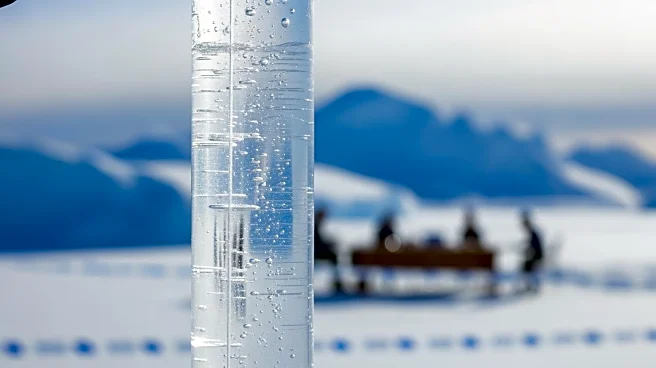
Researchers have successfully drilled 523 meters through the ice in Antarctica, retrieving a sediment core that spans 23 million years of climate history. This core, extracted from the Crary Ice Rise in West Antarctica, provides valuable insights into
the behavior of ice sheets during warmer climate periods. The drilling was part of the SWAIS2C project, which aims to understand the sensitivity of the West Antarctic Ice Sheet to future warming. The sediment core reveals evidence of past ice sheet retreats, offering a clearer understanding of how these ice sheets might respond to ongoing global temperature increases. The project involved an international team of scientists, engineers, and polar specialists from 10 countries, who overcame significant technical challenges to complete the drilling.
Why It's Important?
The findings from this drilling project are crucial for predicting future sea-level rise as global temperatures continue to climb. By understanding how the West Antarctic Ice Sheet behaved during past warm periods, scientists can better estimate its potential response to current and future climate change. This research is particularly significant for coastal communities worldwide, which could be affected by rising sea levels. The data gathered will help refine models that predict ice sheet dynamics, contributing to more accurate forecasts of global sea-level changes. The success of this project also demonstrates the capability of international collaboration in addressing complex scientific challenges.
What's Next?
The research team plans to continue analyzing the sediment core to identify specific triggers for past glacier retreats in Antarctica. This analysis will help pinpoint when these events occurred and how quickly the ice sheets responded to temperature changes. Future drilling projects are also being considered to expand the understanding of Antarctica's ice sheet dynamics. The insights gained from this research could influence global climate policy and inform strategies for mitigating the impacts of sea-level rise.