



What's Happening?
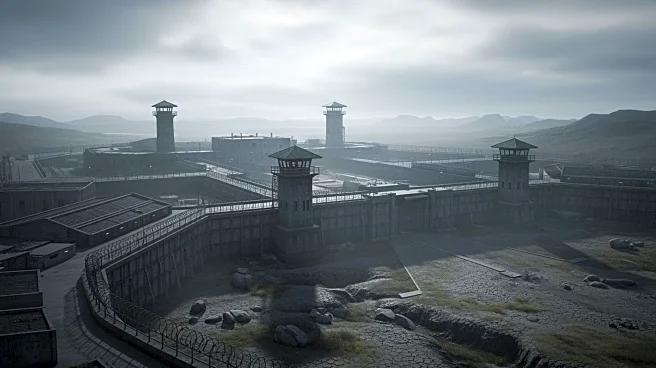
Syrian government forces have taken control of al-Aqtan prison, which houses members of the Islamic State (IS) group, following the evacuation of Kurdish fighters. This development comes after a deal was reached allowing Kurdish forces to withdraw from
the area. The Syrian Interior Ministry announced that the government’s prisons authority is now managing the facility, located north of Raqqa. This transition follows a similar takeover of Shaddadeh prison, where 120 IS detainees had previously escaped, though most were recaptured. The U.S. military has also begun transferring some of the 9,000 IS detainees held by the Kurdish-led Syrian Democratic Forces (SDF) in northeast Syria. The SDF, which played a crucial role in combating IS, has been gradually withdrawing as part of a broader agreement with the Syrian government.
Why It's Important?
The transfer of control over IS detainees from Kurdish to Syrian government forces marks a significant shift in the region's security dynamics. This move could potentially stabilize the area by consolidating control under a single authority, reducing the risk of IS resurgence. However, it also raises concerns about the treatment of detainees and the potential for human rights abuses under Syrian government control. The U.S. decision to support the transfer aligns with its strategy to reduce its military footprint in Syria, signaling a shift in its involvement in the region. This development could impact regional security, influence U.S. foreign policy, and affect the balance of power among local and international stakeholders.
What's Next?
The Syrian government is expected to continue consolidating control over former SDF-held territories, potentially leading to further negotiations or conflicts with remaining Kurdish forces. The U.S. and Iraq are discussing the transfer of IS detainees to Iraq, which could alleviate some of the burden on Syrian facilities. The international community will likely monitor the situation closely, particularly regarding the treatment of detainees and the potential for renewed IS activity. The integration of SDF forces into Syrian government structures may also proceed, affecting the future of Kurdish autonomy in the region.