







What's Happening?
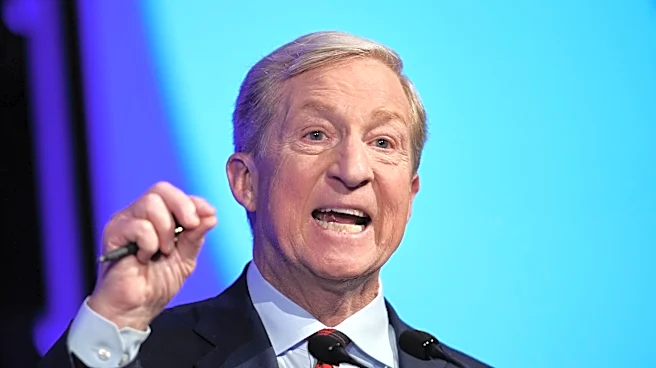
In a recent letter to the editor, criticism was directed at billionaire Tom Steyer for his substantial campaign spending in the California governor's race. Steyer, who has invested over $200 million in his campaign, was urged to consider alternative uses
for his wealth that could directly benefit Californians. Suggestions included allocating funds to school districts, tuition grants, and medical research. The letter reflects a broader sentiment of frustration among voters who feel disconnected from wealthy candidates claiming to understand the struggles of ordinary citizens. The commentary highlights the ongoing debate about the role of money in politics and the responsibilities of wealthy individuals in addressing societal issues.
Why It's Important?
The critique of Tom Steyer's campaign spending underscores a significant issue in American politics: the influence of wealth in electoral processes. The ability of wealthy individuals to self-fund campaigns raises questions about the accessibility and fairness of political participation. It also highlights the potential for alternative philanthropic investments that could address pressing social needs. This discussion is particularly relevant in California, where economic disparities and public service funding are critical issues. The debate may influence public opinion on campaign finance reform and the expectations placed on wealthy individuals to contribute to societal well-being beyond political ambitions.