





What's Happening?
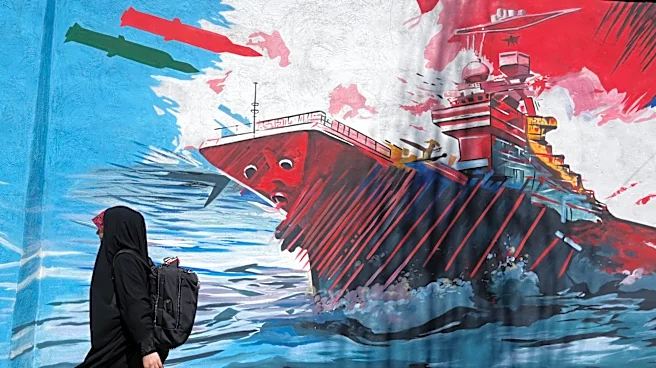
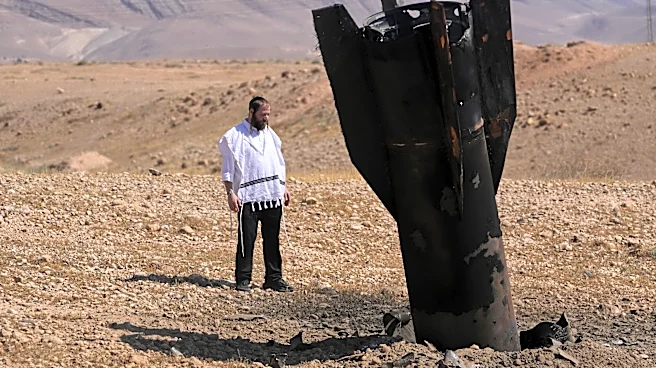
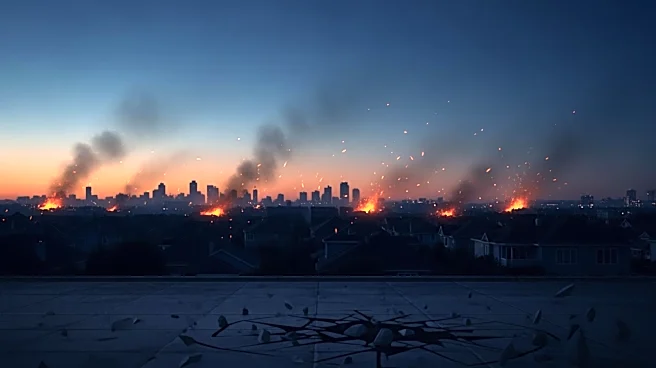
The future of Middle East peace talks is uncertain following recent U.S. military strikes on Iran. The strikes were a response to Iran's alleged downing of a U.S. helicopter near the Strait of Hormuz. President Trump has stated that Iran will 'pay the price'
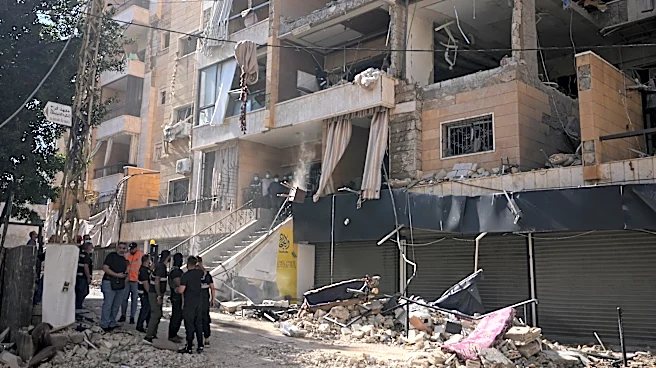
for its actions, while Iran's foreign ministry has expressed the need to reassess its participation in the peace talks. Despite ongoing negotiations, significant gaps remain, with Iran seeking the lifting of sanctions and control over the Strait of Hormuz, while the U.S. demands assurances against nuclear weapon development. The situation is further complicated by Israel's continued violations of the ceasefire in Lebanon, according to Iran.
Why It's Important?
The escalation of military actions between the U.S. and Iran poses a significant threat to regional stability and the potential for a comprehensive peace agreement. The ongoing conflict affects global oil prices and economic stability, given the strategic importance of the Strait of Hormuz. The U.S. seeks to prevent Iran from developing nuclear capabilities, while Iran aims to alleviate economic pressures from international sanctions. The outcome of these tensions could influence U.S. domestic politics, particularly with midterm elections approaching, as well as international relations in the Middle East.
What's Next?
The continuation of military actions could further jeopardize peace negotiations. Both the U.S. and Iran have expressed a desire to reach a deal, but the path forward remains fraught with challenges. Regional mediators, such as Qatar, are involved in efforts to de-escalate tensions. The U.S. may continue to apply military and economic pressure on Iran, while Iran could leverage its control over the Strait of Hormuz to negotiate terms. The international community will be closely monitoring the situation for any shifts that could lead to a resolution or further conflict.