
What's Happening?
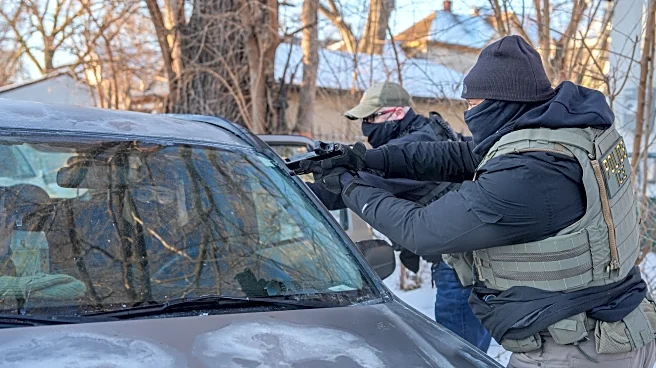
The Eighth Circuit Court of Appeals has issued a stay on a district court ruling that sought to limit the actions of federal agents against protesters and observers of immigration enforcement. The appellate court, based in St. Louis, found the lower court's
decision to be overly broad and impractical for the operations of Immigration and Customs Enforcement (ICE) and Border Patrol agents. This decision comes after U.S. District Court Judge Katherine Menendez had prohibited immigration agents in Minnesota from arresting, detaining, or retaliating against peaceful protesters or observers, including restrictions on traffic stops and the use of tear gas. The original ruling was a result of a lawsuit filed by the American Civil Liberties Union of Minnesota, which claimed that federal agents violated the First and Fourth Amendment rights of protesters and observers.
Why It's Important?
This ruling is significant as it underscores the ongoing tension between federal law enforcement agencies and civil rights groups regarding the treatment of protesters and observers. The appellate court's decision to halt the lower court's ruling highlights the challenges in balancing law enforcement duties with the protection of civil liberties. The outcome of this case could set a precedent for how federal agents are allowed to interact with protesters, potentially impacting future demonstrations and the enforcement of immigration laws. The decision has been celebrated by U.S. Attorney General Pam Bondi, who argued that the lower court's ruling undermined federal law enforcement efforts.
What's Next?
The case is likely to continue through the legal system as both sides may seek further judicial review. The ACLU and other civil rights organizations may continue to challenge the actions of federal agents, potentially leading to more lawsuits or legislative efforts to protect the rights of protesters. Meanwhile, federal agencies will likely continue to advocate for their ability to enforce immigration laws without what they perceive as undue restrictions. The outcome of this legal battle could influence future policies and practices regarding the interaction between law enforcement and civil society.