


What's Happening?
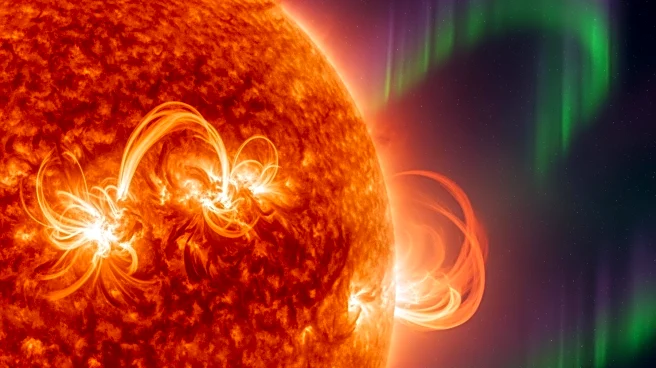
A rare aurora was photographed over southern Brazil on January 19 during a powerful geomagnetic storm. Astrophotographer Egon Filter captured the faint purple-red glow from Cambará do Sul in Brazil's Rio Grande do Sul state. Auroras are typically seen
near the Earth's magnetic poles, making this sighting at such a low latitude unusual. The phenomenon occurred within the South Atlantic Anomaly, a region where Earth's magnetic field is weaker. This anomaly can lead to faint, diffuse auroras rather than the bright displays seen at higher latitudes.
Why It's Important?
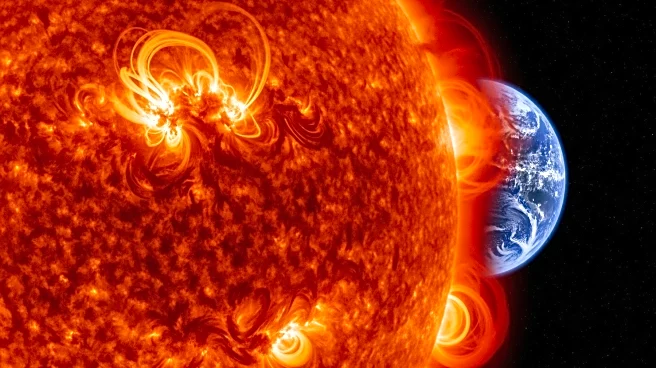
The occurrence of an aurora in Brazil highlights the dynamic nature of Earth's magnetic field and its interactions with solar activity. Such events can provide valuable data for scientists studying geomagnetic storms and their effects on the planet. The sighting also underscores the potential for increased auroral activity as the sun enters a more active phase. For the public, this rare event serves as a reminder of the beauty and complexity of natural phenomena, sparking interest in space weather and its impact on Earth.
Beyond the Headlines
The aurora over Brazil raises questions about the implications of geomagnetic storms on technology and infrastructure. As solar activity increases, there is a heightened risk of disruptions to satellite communications, power grids, and navigation systems. Understanding these risks is crucial for developing strategies to mitigate potential impacts. Additionally, the event highlights the importance of international collaboration in monitoring space weather, as phenomena like auroras can have global consequences. The sighting also emphasizes the role of citizen scientists and photographers in documenting and sharing these rare occurrences.