


What's Happening?
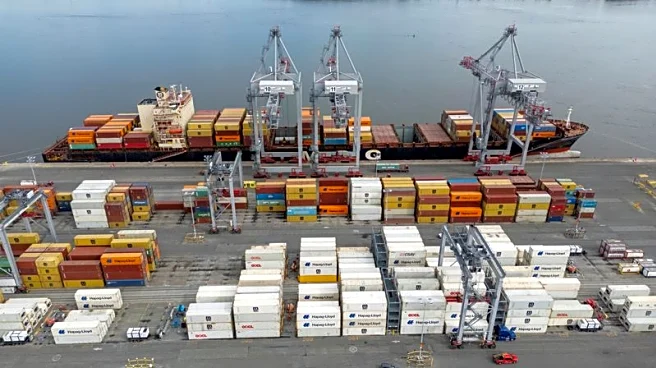
Canada's economic growth stalled in November, with GDP flat month-on-month, as growth in services was offset by weakness in goods-producing industries. The impact of U.S. tariffs on steel, automotive, lumber, and aluminum has hindered output in these
sectors. A Bank of Canada survey indicates subdued business sentiment, reduced investments, and expected layoffs. Preliminary data suggests a slight growth in December, but the fourth-quarter growth is projected to decelerate by 0.5% annualized, raising concerns of a potential recession.
Why It's Important?
The stagnation in Canada's economic growth highlights the broader impact of U.S. tariffs on international trade and economic stability. The affected sectors, particularly manufacturing, are crucial to Canada's GDP, and their decline poses risks to employment and economic resilience. The potential for a technical recession underscores the need for strategic economic policies to mitigate the adverse effects of trade tensions and support growth in vulnerable industries.
What's Next?
Canada may need to explore policy measures to support affected industries and stimulate economic growth. The government could consider trade negotiations or adjustments to tariffs to alleviate the impact on key sectors. Monitoring economic indicators and business sentiment will be crucial in assessing the effectiveness of these measures and ensuring economic stability.