
What's Happening?
HMS Duncan, a Royal Navy Type 45 destroyer, has returned to Portsmouth to commence a significant refit, making it the final vessel in its class to undergo extensive propulsion upgrades. The refit, to be
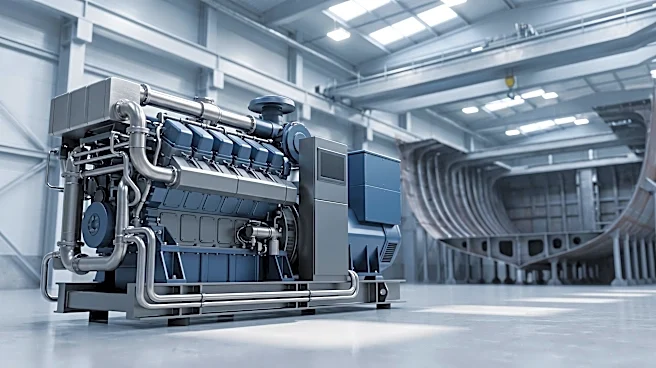
carried out by BAE Systems, will incorporate the Power Improvement Project (PIP), which involves modifying the propulsion system with three new Rolls-Royce MTU diesel generator sets. This enhancement aims to boost electrical generating capacity and resolve long-standing reliability issues with the class's power and propulsion. Additionally, the ship will receive substantial improvements to its air defense capabilities, including the installation of 24 Sea Ceptor missiles in a new silo, allowing the main magazine to be dedicated to longer-range Aster 30 missiles. The Sea Viper Evolution upgrade will also be implemented, improving the Type 45's ability to counter ballistic missile threats through modifications to the Sampson radar, command system, and Aster 30 weapon. This refit follows HMS Duncan's recent deployments, including serving as flagship of Standing NATO Maritime Group 2 and providing air defense for U.S. Navy forces in the Eastern Mediterranean.
Why It's Important?
This extensive refit of HMS Duncan by BAE Systems is crucial for maintaining the operational readiness and advanced capabilities of the Royal Navy's destroyer fleet, which indirectly impacts allied naval operations, including those involving the U.S. Navy. The Power Improvement Project addresses critical propulsion reliability issues that have affected the Type 45 class, ensuring these vessels can effectively perform their missions. Enhanced air defense systems, including the addition of Sea Ceptor missiles and the Sea Viper Evolution upgrade, significantly bolster the ship's ability to counter modern threats, such as ballistic missiles. For BAE Systems, securing and executing such a complex upgrade project reinforces its position as a key defense contractor and a vital partner in naval modernization efforts. The successful completion of this refit will ensure that HMS Duncan, and by extension the Type 45 fleet, remains a formidable asset in international maritime security operations, contributing to the collective defense capabilities of NATO allies, including the United States.
What's Next?
Following its de-ammunitioning and de-storing, HMS Duncan will be formally handed over to BAE Systems for the lengthy upkeep period. The refit will proceed with the installation of the new Rolls-Royce MTU diesel generator sets, the integration of the Sea Ceptor missile system, and the implementation of the Sea Viper Evolution upgrade. While HMS Duncan undergoes this extensive modernization, the operational status of the Type 45 fleet will see temporary adjustments. HMS Daring is anticipated to return to sea later this year, which will partially offset Duncan's withdrawal. HMS Diamond and HMS Defender will remain in their respective major refits, with HMS Defender expected to rejoin the fleet in 2027. The successful completion of Duncan's refit will restore the full operational strength of the Type 45 destroyers, ensuring the Royal Navy's continued capacity to participate in joint exercises and deployments with allied navies, including those of the United States.
Beyond the Headlines
The comprehensive upgrade of HMS Duncan by BAE Systems highlights a broader trend in naval defense: the continuous need for modernization to counter evolving threats and maintain technological superiority. The Power Improvement Project, specifically, underscores the challenges of integrating complex propulsion systems and the long-term commitment required to address design limitations in advanced warships. The enhancement of air defense capabilities with Sea Ceptor and Sea Viper Evolution reflects the increasing sophistication of aerial and ballistic missile threats, pushing navies to invest in multi-layered defense systems. This refit also signifies the intricate relationship between defense contractors like BAE Systems and national navies, where sustained partnerships are essential for technological advancement and operational readiness. The lessons learned from managing such extensive refits, particularly those impacted by external factors like pandemics, contribute to best practices in defense program management, influencing future shipbuilding and maintenance strategies across allied nations.