


What's Happening?
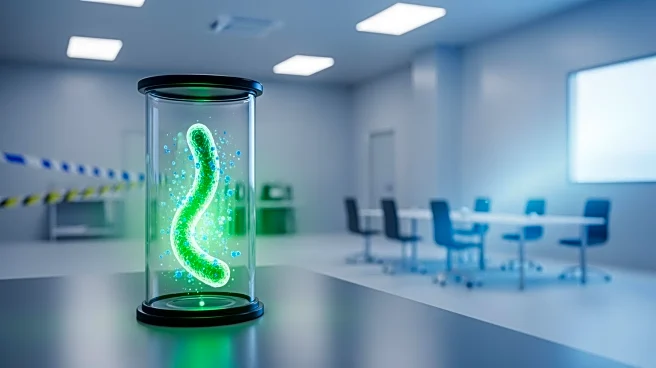
Scientists have discovered 26 new bacterial species in NASA's cleanrooms at the Kennedy Space Center in Florida, where the Phoenix Mars Lander was assembled. Despite rigorous cleaning protocols, these microbes have adapted to survive in the sterile environments,
raising concerns about potential contamination of other planets. The study, published in the journal Microbiome, highlights the genetic adaptations that allow these bacteria to persist, such as resistance to cleaning chemicals and the ability to form biofilms. Researchers are now planning to test these microbes in a planetary simulation chamber to assess their survival capabilities in space and on Mars.
Why It's Important?
The discovery of these resilient bacteria in NASA's cleanrooms is crucial for planetary protection efforts. If these microbes can survive the harsh conditions of space travel, they could potentially contaminate other planets, complicating the search for extraterrestrial life. This finding underscores the need for more stringent decontamination protocols and could lead to the development of new technologies to ensure spacecraft remain sterile. The research also provides insights into microbial survival strategies, which could have applications in biotechnology and astrobiology.
What's Next?
Researchers are constructing a planetary simulation chamber to expose the newly discovered bacteria to Mars-like conditions, including low air pressure, high radiation, and extreme temperature fluctuations. These experiments, set to begin in early 2026, will help determine the microbes' survival limits and inform future planetary protection measures. The study may also prompt NASA and other space agencies to review and enhance their cleanroom protocols to prevent microbial contamination of space missions.