






What's Happening?
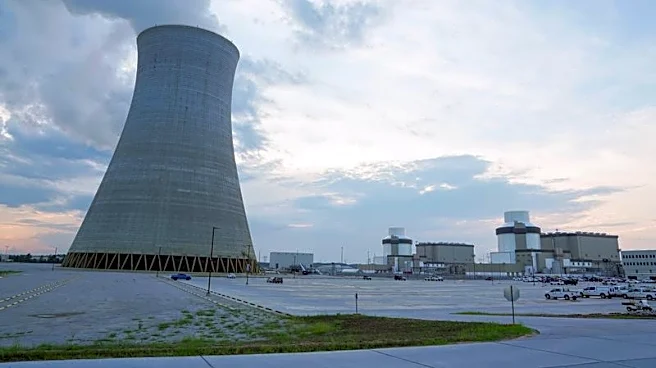
A report has surfaced alleging that Pacific Gas & Electric (PG&E) is overcharging customers to maintain operations at the Diablo Canyon Power Plant, California's sole nuclear power facility. The report claims PG&E inflated costs when requesting a loan
to keep the plant operational, potentially leading to a $685.6 million burden on taxpayers if legislative action is not taken. The plant, which was initially set to close in 2025, received approval to continue operations until 2030. PG&E had requested a $1.4 billion loan from the state, promising repayment through federal grants. However, the Department of Energy later assessed that only $741.4 million was necessary for the plant's continued operation, creating a significant funding gap. Critics argue that PG&E, having reported record profits, should have its shareholders cover the loan shortfall rather than taxpayers.
Why It's Important?
The allegations against PG&E have significant implications for California's energy policy and financial management. If the utility company is indeed inflating costs, it could lead to increased financial burdens on taxpayers and utility customers. The report suggests that eliminating certain ratepayer fees could save California utility customers an estimated $1.84 billion from 2027 to 2030. This situation raises questions about the accountability and transparency of utility companies in managing public funds and resources. Furthermore, the controversy highlights the need for legislative oversight to ensure that financial decisions related to energy infrastructure are made in the public's best interest. The outcome of this issue could influence future energy policy decisions and the financial strategies of utility companies in California.
What's Next?
The report's findings may prompt legislative action to address the alleged overcharging and funding gap. Lawmakers could consider measures to hold PG&E accountable for the loan repayment and potentially eliminate unnecessary ratepayer fees. Additionally, there is ongoing discussion about extending the plant's operations beyond 2030, which could lead to further legislative scrutiny and public debate. Stakeholders, including consumer advocacy groups and environmental policy experts, are likely to push for greater transparency and financial oversight in the management of the state's energy resources. The situation may also influence broader discussions on the role of nuclear energy in California's energy mix and the financial responsibilities of utility companies.
Beyond the Headlines
The controversy surrounding PG&E's management of the Diablo Canyon Power Plant raises broader ethical and financial questions about the role of utility companies in public infrastructure. The report suggests that PG&E's financial practices may disproportionately benefit shareholders at the expense of taxpayers and utility customers. This situation underscores the importance of financial oversight and accountability in the energy sector, particularly as California navigates its transition to cleaner energy sources. The debate over Diablo Canyon's future also highlights the complex balance between maintaining reliable energy supplies and ensuring responsible financial management. As discussions continue, stakeholders may advocate for reforms to enhance transparency and accountability in utility operations.