


What's Happening?
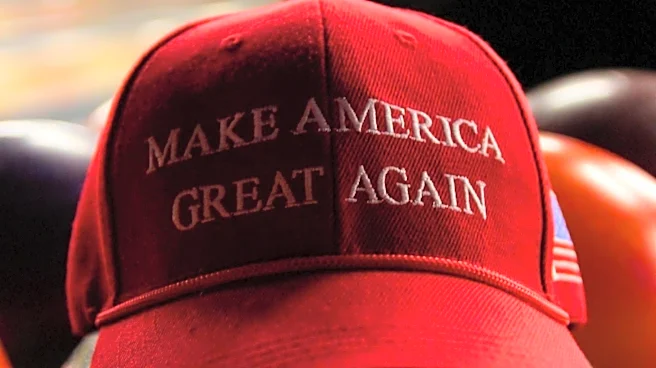
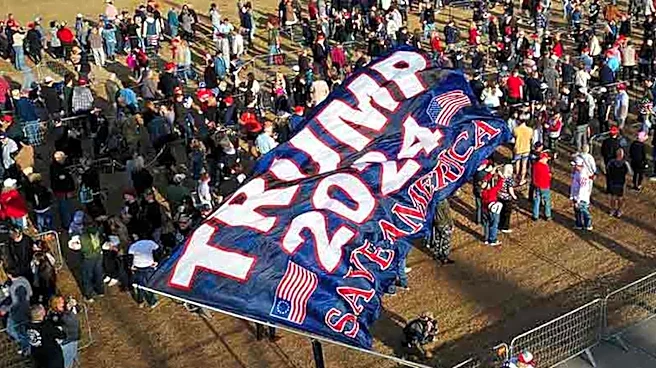
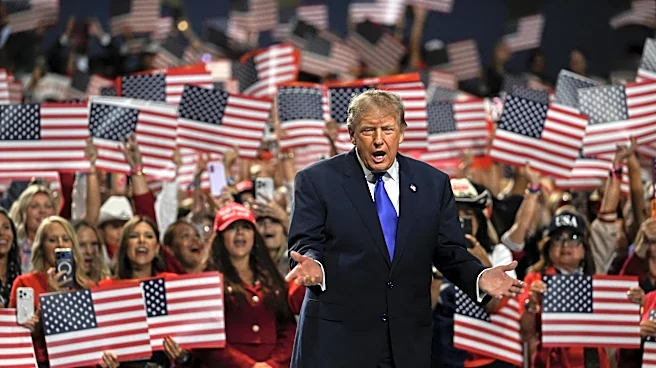
President Trump organized a convention to energize the Republican base in anticipation of the upcoming midterm elections. However, a notable number of Republican officials who are running for re-election have chosen not to attend, opting instead to campaign
in their local districts. This avoidance suggests a potential concern among these candidates that President Trump's current unpopularity might negatively impact their electoral prospects. The decision by these officials to distance themselves from the President's event indicates a strategic move to appeal to a broader electorate or to avoid association with any controversies surrounding the President.
Why It's Important?
This trend is significant for U.S. politics as it signals a potential fracturing within the Republican Party and a strategic shift among some candidates. The reluctance of re-election-seeking Republicans to appear alongside President Trump could indicate a perceived vulnerability of the party in the upcoming midterms. It suggests that the President's influence, while still strong with his base, may not be universally beneficial for all Republican candidates, particularly those in swing districts or facing tough competition. This dynamic could affect the overall outcome of the midterm elections, potentially leading to a more diverse political landscape and influencing future party leadership and policy directions.
What's Next?
The midterm elections will serve as a crucial test of President Trump's ongoing influence within the Republican Party and the broader electorate. The performance of candidates who distanced themselves from the President, compared to those who embraced his support, will provide insights into the most effective campaign strategies for future elections. Depending on the election results, there could be a re-evaluation of party strategy, potentially leading to either a reinforcement of President Trump's leadership or a push for new directions within the Republican Party. The coming weeks will likely see continued efforts by candidates to define their campaigns independently or in alignment with the President, depending on their perceived political advantage.
Beyond the Headlines
The phenomenon of Republican candidates avoiding President Trump's convention delves into the complex dynamics of political branding and party cohesion. It highlights the ethical dilemma faced by politicians who must balance party loyalty with their own electoral survival, especially when a party leader's popularity is contentious. This situation could trigger a long-term shift in how political parties manage their public image and how individual candidates navigate their relationship with prominent figures. It also raises questions about the future of the Republican Party, whether it will remain largely defined by President Trump's persona or if it will seek to broaden its appeal by embracing a more diverse set of voices and ideologies, potentially leading to internal power struggles and a redefinition of its core principles.