



What's Happening?
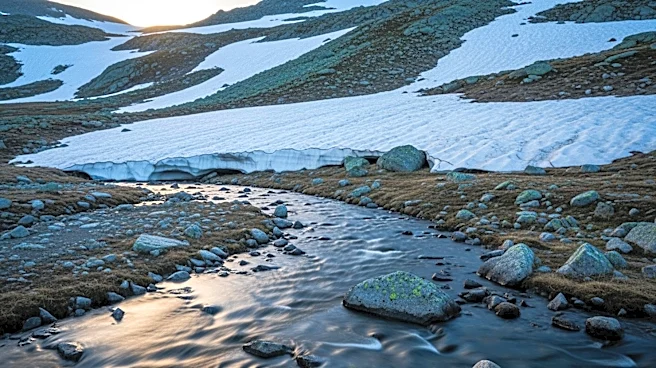
The American West is experiencing an unprecedented rapid snow melt, alarming scientists and water resource managers. The snowpack, which acts as a crucial water reserve, is at record-low levels due to a historically warm winter and high March temperatures.
The 'snow water equivalent' (SWE), a measure of potential water supply from snowmelt, is significantly below average across key regions. For instance, California's Sierra Nevada reported only 18% of its average SWE, while the Colorado River headwaters, vital for over 40 million people, recorded just 24% of average SWE. This situation is exacerbated by a lack of significant snowfall in March, traditionally a month for replenishing snowpacks. The rapid melt-off is expected to impact water availability for agriculture, municipal use, and ecological systems.
Why It's Important?
The rapid snow melt poses a significant threat to water supply in the American West, a region already grappling with drought conditions. The Colorado River, a critical water source for multiple states and Mexico, is at risk of reaching 'deadpool' status, where water levels are too low to flow through dams and generate hydroelectric power. This could lead to severe water shortages, affecting agriculture, urban areas, and indigenous communities. Additionally, the early melt-off could exacerbate wildfire risks, as dry conditions prevail earlier in the year. The situation underscores the urgent need for water conservation measures and highlights the broader impacts of climate change on regional water resources.
What's Next?
In response to the dire snowpack conditions, some municipalities are already implementing water restrictions. For example, Salt Lake City has initiated conservation efforts to reduce water usage by 10 million gallons. As the situation develops, more areas may follow suit with similar measures. The ongoing negotiations among the seven states reliant on the Colorado River are likely to intensify, as stakeholders seek to address the allocation of dwindling water resources. The potential for an extended fire season also looms, prompting preparations for increased firefighting efforts. Long-term, the region may need to invest in infrastructure and policies to adapt to a future with less reliable snowpack and water supply.
Beyond the Headlines
The rapid snow melt in the American West highlights the broader implications of climate change, particularly the shift towards warmer winters with less snow and more rain. This trend could lead to more frequent and severe water shortages, challenging existing water management strategies. The situation also raises ethical and legal questions about water rights and the equitable distribution of resources among states, indigenous tribes, and other stakeholders. As climate change continues to alter precipitation patterns, the region may need to explore innovative solutions, such as water recycling and desalination, to ensure sustainable water supplies.