

What's Happening?
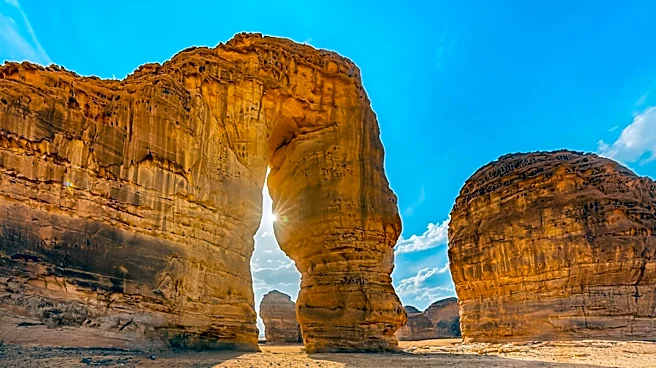
AlUla, Saudi Arabia, is emphasizing its community-led conservation model as global interest in nature-based travel grows. The region, rich in over 200,000 years of human history and 7,000 years of archaeological heritage, has implemented an integrated
ranger program. This program protects 12,160 square kilometers of nature reserves and cultural sites while promoting sustainable tourism. Rangers patrol over 50,000 kilometers monthly across six protected reserves, focusing on conservation, biodiversity monitoring, archaeological site protection, and visitor engagement. The initiative is part of AlUla's 'light-touch' tourism strategy, which limits visitor numbers to prevent overtourism and invests in ecological restoration and local employment. Conservation efforts include restoring 65,000 hectares of land by 2035, planting over 140,000 native plants, and reintroducing species like the Arabian Oryx and Arabian Leopard.
Why It's Important?
The conservation efforts in AlUla highlight a shift in luxury travel towards meaningful, low-impact experiences. By integrating conservation into the core of its tourism strategy, AlUla demonstrates how heritage preservation and sustainable travel can complement each other. This approach not only protects archaeological treasures and restores ecosystems but also supports local communities through employment and stewardship. As travelers increasingly seek destinations where conservation is integral to the experience, AlUla stands out as a leading example of regenerative tourism. This model could influence other regions to adopt similar strategies, promoting global sustainable tourism practices.