





What's Happening?
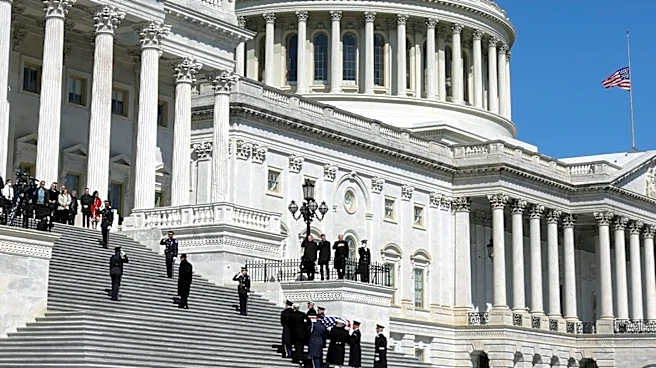
Denmark is proactively training its parish priests to handle a significant increase in military funerals, preparing for scenarios that could involve up to 20 Danish soldiers killed daily in a major European conflict. This initiative, led by Thomas H.
Beck, head of Denmark’s military chaplains, stems from concerns about potential military confrontations on NATO’s eastern flank, particularly in the Baltic states where Danish troops are deployed. Starting in January, military chaplains will conduct training sessions for approximately 2,000 civilian clergy. The training will cover procedures for receiving fallen soldiers, conducting military funerals, notifying relatives, and adhering to military traditions, including the use of national flags, military headgear, sabers, and medals. The program, 'People’s Church and Defense,' has received 1.8 million Danish kroner in funding from Denmark’s Ministry of Defence.
Why It's Important?
This preparation highlights the escalating concerns among European nations regarding the potential for a large-scale conflict, particularly in the context of ongoing tensions on NATO's eastern flank. Denmark's initiative underscores a shift in military planning from managing limited casualties, as experienced in Afghanistan, to preparing for potentially much higher losses. This reflects a sober assessment of the current geopolitical climate and the lessons learned from the war in Ukraine, where casualty figures have been substantial. The involvement of civilian clergy in military funeral preparations signifies a national-level readiness effort, indicating that the potential impact of such a conflict is being considered across various societal sectors, not just the military. This move could influence other European nations to undertake similar preparedness measures, further emphasizing the gravity of the perceived threat.
What's Next?
The training program for Danish parish priests is set to commence in January, with ongoing sessions to ensure a broad base of clergy is prepared for potential mass casualty events. This initiative is part of a broader trend of increased military preparedness across Europe, with countries like Poland also strengthening their defenses and preparing for potential confrontations. While Denmark's Defence Intelligence Service currently assesses no direct military threat to the Kingdom, the preparations indicate a strategic foresight for potential deployments abroad. Future steps may include further integration of civilian resources into national defense planning, increased public awareness campaigns about civil defense, and continued collaboration with other NATO members on large-scale military exercises that simulate high-casualty scenarios, similar to the Swedish exercise involving 500 dead soldiers that Danish chaplains participated in.
Beyond the Headlines
The Danish initiative to train civilian priests for mass military funerals reveals a profound societal shift in how European nations are confronting the prospect of large-scale conflict. It moves beyond purely military readiness to address the psychological and social impact of war on the home front. This level of preparation, involving religious institutions, suggests a recognition that a major conflict would require a comprehensive national response, affecting communities and families directly. It also implicitly acknowledges the potential for a conflict that could challenge traditional notions of warfare and casualty management. The focus on military traditions in funerals underscores the importance of national identity and remembrance in times of crisis, aiming to provide solace and structure amidst potential devastation. This preparedness reflects a deeper societal anxiety and a re-evaluation of national security in an increasingly volatile global environment.