



What's Happening?
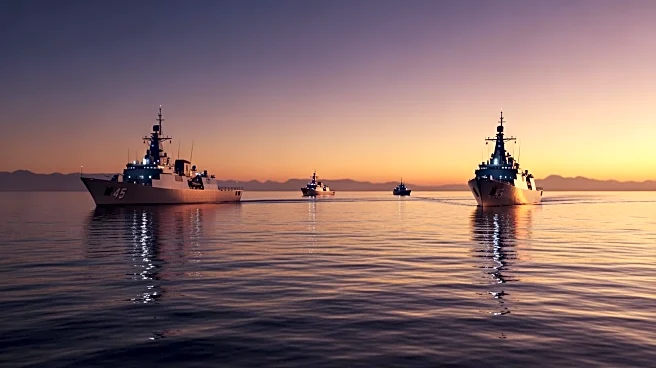
Russia and China have conducted a joint military patrol near Japan, involving air and naval units, including bombers and an aircraft carrier. This operation took place over the East China Sea and the western Pacific Ocean, as part of an annual cooperation
plan between the two countries. The patrol included Russian Tu-95MS and Chinese H-6K bombers, as well as fighter jets and early warning aircraft. Japan responded by scrambling fighter jets and dispatching a warship to monitor the Chinese aircraft carrier CNS Liaoning. The patrol flew over key waterways near Japan, such as the Tsushima Strait and the Miyako Strait, and operated in areas beyond Japan's territorial waters.
Why It's Important?
The joint military activities by Russia and China near Japan underscore the growing military cooperation between the two countries, which is seen as a challenge to U.S. and allied interests in the region. This cooperation is part of a broader strategic alignment against U.S. influence, particularly in Asia. The maneuvers come amid heightened tensions between the Moscow-Beijing alliance and Tokyo, especially concerning Japan's potential military involvement in a Chinese blockade of Taiwan and its hosting of U.S. missiles. The patrols highlight the strategic importance of the region and the potential for increased military confrontations.
What's Next?
Russia and China are expected to continue their military activities in the western Pacific, potentially increasing tensions with the U.S.-Japan alliance. The ongoing military cooperation between Russia and China may lead to further joint patrols and exercises, challenging the security dynamics in the region. Japan is likely to maintain its vigilance and preparedness to respond to any perceived threats to its territorial integrity and regional stability.