
What's Happening?
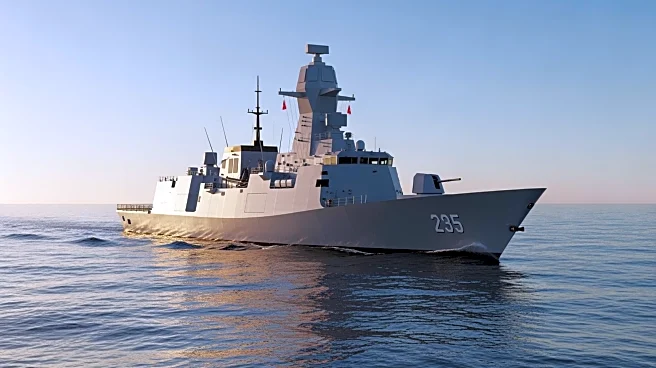
Japan has launched the final vessel in its Mogami-class frigate series, the JS Yoshii, at Mitsubishi Heavy Industries' Nagasaki shipyard. This marks the completion of a significant naval program aimed
at replacing the aging Abukuma-class frigates of the Japan Maritime Self-Defense Force (JMSDF). The Mogami-class frigates, including the newly launched Yoshii, are equipped with advanced weaponry and technology, such as a BAE Systems 127 mm naval gun, a vertical launch system for surface-to-air missiles, and anti-ship missile launchers. These frigates also feature anti-submarine warfare capabilities, including torpedo tubes and sonar systems. The JS Yoshii is expected to enter service by 2027, joining the fleet of 11 other Mogami-class frigates that have been commissioned since the program's inception.
Why It's Important?
The launch of the final Mogami-class frigate represents a significant enhancement of Japan's maritime defense capabilities. As regional tensions in the Asia-Pacific continue to rise, particularly with the growing naval presence of neighboring countries, Japan's investment in modernizing its naval fleet is crucial for maintaining a strategic balance. The advanced capabilities of the Mogami-class frigates, including their anti-air, anti-ship, and anti-submarine warfare systems, provide Japan with a versatile and powerful tool for safeguarding its maritime interests. This development also underscores Japan's commitment to strengthening its self-defense forces amid evolving security challenges.
What's Next?
With the completion of the Mogami-class program, the focus may shift to integrating these vessels into the JMSDF's operational framework. Training and deployment strategies will likely be developed to maximize the effectiveness of the new frigates. Additionally, Japan may continue to explore further advancements in naval technology and potential collaborations with international partners to enhance its defense capabilities. The successful integration of the Mogami-class frigates could also influence future naval procurement and development strategies.