
What's Happening?
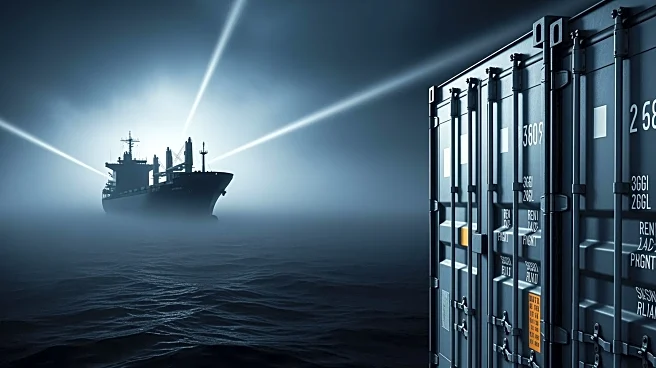
U.S. special forces recently intercepted a ship in the Indian Ocean carrying military equipment from China to Iran. This operation, reported by the Wall Street Journal, was part of a broader Pentagon initiative
to disrupt Iran's rearmament efforts following Israeli and American strikes earlier in the year. The ship, under surveillance, was boarded by U.S. military units several hundred kilometers off the coast of Sri Lanka. The cargo, intended for Iranian companies involved in missile development, was confiscated and subsequently destroyed. The shipment included components for conventional weapons and dual-use items, which can serve both civilian and military purposes. This action occurs amid heightened maritime tensions involving Iran, which has been linked to several recent naval incidents.
Why It's Important?
The seizure of the arms shipment underscores the ongoing geopolitical tensions in the region, particularly involving Iran's military capabilities and its relationships with global powers like China. The operation highlights the U.S. commitment to curbing Iran's military expansion and its potential threat to regional stability. This development could impact U.S. foreign policy and military strategy in the Middle East, as well as its diplomatic relations with China. The interception also reflects broader concerns about the proliferation of dual-use technologies that can enhance military capabilities, posing challenges to international security frameworks.
What's Next?
The U.S. is likely to continue its surveillance and interception efforts to prevent further arms shipments to Iran. This could lead to increased military presence in strategic maritime regions, potentially escalating tensions with Iran and affecting international shipping routes. Diplomatic efforts may also intensify as the U.S. seeks to address these security concerns with allies and through international forums. Iran's response to this interception, particularly in terms of its military and diplomatic strategies, will be closely watched by global stakeholders.