






What's Happening?
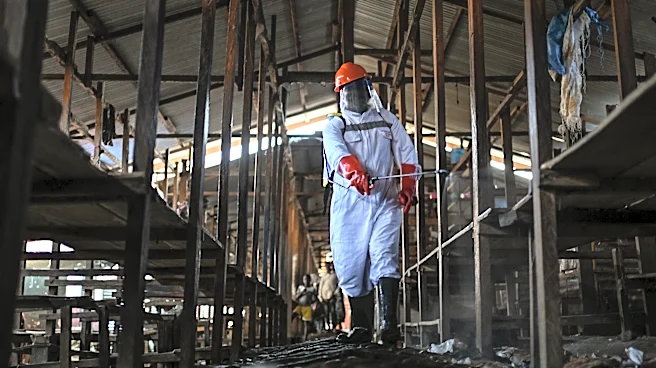
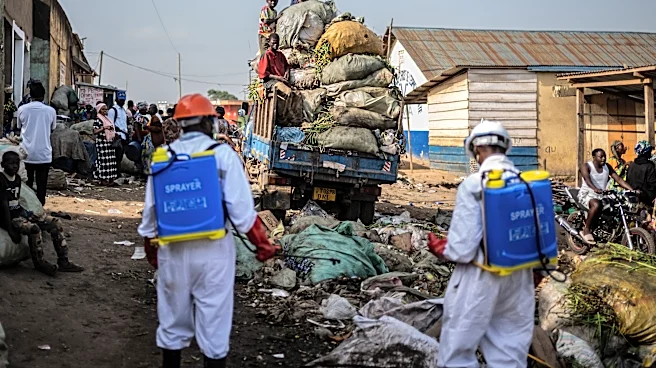
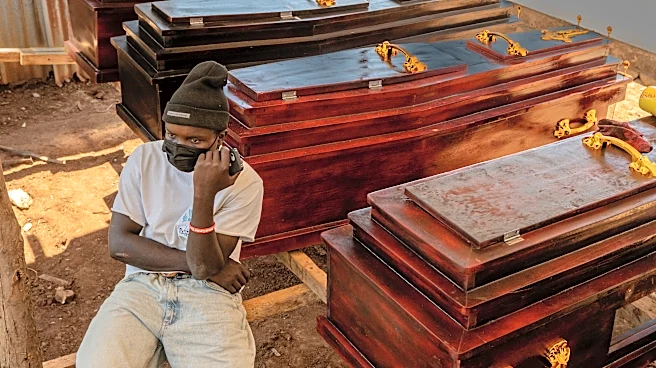
The Democratic Republic of Congo (DR Congo) is experiencing a severe Ebola outbreak, with over 900 suspected cases reported in the eastern region. The situation is exacerbated by international aid cuts, which have left health workers struggling to manage
the crisis. The outbreak is concentrated in the Ituri Province, a region already destabilized by violence from armed rebel groups and mass displacement. Health facilities are overwhelmed, and the burning of treatment centers in Rwampara and Mongbwalu has further complicated the response efforts. The Congolese government, along with various aid agencies, is attempting to control the outbreak, but resources are limited. The Bundibugyo strain of the Ebola virus, responsible for this outbreak, currently has no approved vaccine or treatment.
Why It's Important?
The resurgence of Ebola in DR Congo poses significant public health challenges, not only for the country but potentially for neighboring regions. The outbreak's management is hindered by reduced international aid, which has diminished the capacity to detect and respond to infectious diseases. This situation highlights the critical need for sustained international support and resources to manage health crises in vulnerable regions. The outbreak also underscores the broader implications of geopolitical instability, as rebel control and local government failures contribute to the difficulty in managing the health crisis. The potential spread of the virus to displacement camps and neighboring countries like Uganda raises concerns about a wider regional health emergency.
What's Next?
Efforts to control the outbreak will likely involve increased international collaboration and resource mobilization. The Congolese government and aid agencies may seek additional support from global health organizations to address the shortage of medical supplies and protective equipment. There is also a need for community engagement to address skepticism and resistance to health interventions, which have led to attacks on treatment centers. Monitoring and containment strategies will be crucial to prevent the spread of the virus to other regions. The international community may need to reassess aid strategies to ensure that health systems in conflict-affected areas are better equipped to handle such outbreaks.
Beyond the Headlines
The Ebola outbreak in DR Congo highlights the intersection of health crises with political and social instability. The region's history of violence and distrust towards foreign aid complicates efforts to manage the outbreak effectively. The situation raises ethical questions about the responsibility of the international community to support health systems in conflict zones. Additionally, the outbreak may prompt a reevaluation of global health priorities and funding mechanisms to ensure that vulnerable regions receive adequate support. The long-term impact on public health infrastructure and community trust in health interventions will be critical areas for future consideration.