


What's Happening?
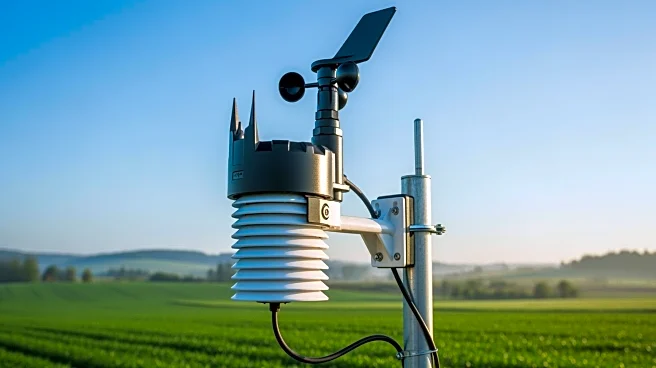
Washington State University (WSU) is advancing agricultural practices through its AgWeatherNet system, which provides precise weather forecasts to farmers. This system, leveraging data from 370 public-private stations across Washington, utilizes machine
learning to offer tools that help predict wheat yields, manage pest issues, and optimize irrigation schedules. The system's ability to deliver microclimate forecasts down to the acre level is a significant development in precision agriculture. Lav Khot, director of AgWeatherNet and a professor at WSU, highlights the role of artificial intelligence in mining data to improve agricultural management decisions. This initiative is part of WSU's broader effort to integrate high-tech research with its public-service mission, supporting farmers from planting to harvest.
Why It's Important?
The integration of advanced forecasting tools in agriculture is crucial for enhancing productivity and sustainability. By providing farmers with precise weather data, WSU's AgWeatherNet helps mitigate risks associated with climate variability, such as frost and heat stress, which can significantly impact crop yields. This technology empowers farmers to make informed decisions, potentially increasing efficiency and reducing resource waste. The use of machine learning and AI in agriculture represents a shift towards more data-driven farming practices, which could lead to higher yields and better resource management. This development is particularly important as the agricultural sector faces challenges from climate change and the need for sustainable practices.
What's Next?
As WSU continues to refine its AgWeatherNet system, further advancements in precision agriculture are expected. The ongoing enhancement of microclimate forecasting capabilities will likely lead to even more tailored agricultural practices. Farmers and agricultural stakeholders may increasingly adopt these technologies, driving a broader transformation in farming methods. Additionally, the success of such initiatives could encourage other institutions to develop similar systems, potentially leading to widespread improvements in agricultural productivity and sustainability across the U.S.