





What's Happening?
The International Water Management Institute (IWMI) has become a partner in the Risk-informed Early Action Partnership (REAP), aiming to strengthen the connection between climate early warning systems, anticipatory action, and pre-arranged finance. REAP,
launched in 2019, unites various stakeholders to enable communities to act before disasters strike. IWMI will contribute its expertise in water and climate risk, early warning, and risk financing, making its open-access tools like the South Asia Drought Monitoring System and the AWARE platform available. These tools integrate drought and flood monitoring, seasonal forecasting, and contingency planning to help authorities and humanitarian organizations translate forecasts into timely actions when specific risk thresholds are met. The partnership focuses on supporting national agencies and humanitarian organizations in Asia and Africa to build knowledge on impact-based forecasting and anticipatory action protocols.
Why It's Important?
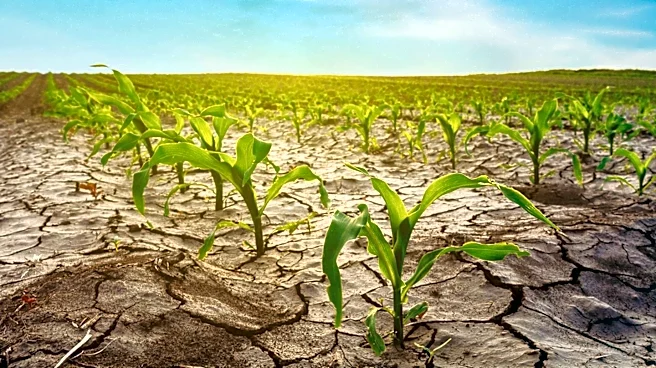
This partnership is critical for mitigating the increasing impact of climate disasters, such as floods and droughts, on livelihoods and basic services. By linking early warnings with pre-arranged finance and practical protocols, REAP and IWMI aim to bridge the gap between forecasts and effective, timely responses. This proactive approach can significantly reduce harm and economic losses by enabling communities to prepare and act before a disaster fully unfolds. The initiative's focus on embedding early warning and early action into national drought, water, and agriculture policies will enhance policy coherence and strengthen resilience across sectors. For vulnerable communities, access to these tools and the resulting early actions can mean the difference between recovery and prolonged hardship, safeguarding lives and livelihoods.
What's Next?
IWMI plans to collaborate with national agencies and humanitarian organizations to develop impact-based forecasting and 'triggers' for anticipatory action protocols for various climate shocks. The institute will also support efforts to translate this information into community-level action, potentially utilizing AI-enabled, multilingual agro-climate advisory services. Furthermore, IWMI will generate evidence and provide design support for financing mechanisms, including pre-arranged and forecast-based finance and climate risk insurance for vulnerable communities. A key priority is embedding early warning and early action into national policies through initiatives like the Drought Action Catalyst and Early Warnings for All. This global partnership aims to scale up risk-informed early action across Asia and Africa, with ongoing efforts to strengthen the link between early warning, early action, and finance.
Beyond the Headlines
The IWMI-REAP partnership signifies a broader shift in humanitarian and development practices towards anticipatory action, emphasizing preparedness over reactive response. This approach highlights the ethical imperative to protect vulnerable populations by leveraging scientific advancements and financial mechanisms to act proactively. The integration of open-access tools and AI-enabled advisories underscores the growing role of technology in climate resilience. This initiative also points to the need for greater collaboration between scientific institutions, governments, and humanitarian organizations to create a more integrated and effective global response to climate change. The focus on pre-arranged finance and climate risk insurance could also set new standards for how international aid and disaster relief are structured, promoting more efficient and impactful interventions.