




What's Happening?
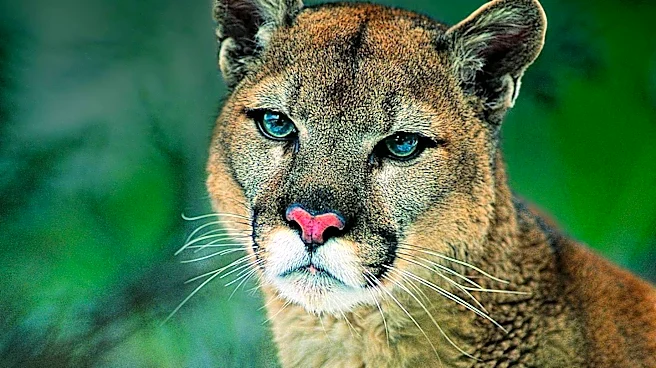
The Illinois Department of Natural Resources (IDNR) has confirmed multiple sightings of a mountain lion moving through southwestern Illinois. The University of Illinois Extension is advising the public to leave the animal alone and allow it to roam naturally.
While large predators like mountain lions, black bears, and wolves are uncommon in Illinois, individual animals have been observed reappearing over the past few decades, often detected through increased use of trail cameras. Experts suggest it is unlikely that an apex predator will establish a permanent presence in the region due to insufficient contiguous forested habitat, even in southern Illinois. Mountain lions typically require a minimum home range of 70 square miles. Residents in Jackson and Union counties are being advised to keep pets and children indoors or under supervision as a precautionary measure. Mountain lions are a protected species, and it is illegal to hunt, kill, or harass them unless they pose an imminent threat to a person or property, which is considered rare.
Why It's Important?
The confirmed presence of a mountain lion in Illinois highlights the ongoing dynamics of wildlife movement and habitat suitability in the U.S. Midwest. This event underscores the challenges faced by large predators in regions with fragmented natural landscapes, as their survival often depends on vast, undisturbed territories. For local communities, it raises awareness about coexisting with wildlife and the importance of adhering to conservation guidelines. The IDNR's stance on protecting the animal, even as it transits through the state, reflects broader conservation efforts to preserve native species. This situation also serves as a reminder for residents to take precautions, such as supervising children and pets, when large predators are known to be in the vicinity, ensuring both human safety and animal welfare. The rarity of such sightings in Illinois makes this a significant ecological event, prompting discussions on wildlife corridors and habitat restoration.
What's Next?
Authorities will likely continue to monitor the mountain lion's movements through southwestern Illinois, primarily relying on confirmed sightings and trail camera data. The University of Illinois Extension and the IDNR will persist in their public awareness campaigns, reiterating the importance of not disturbing the animal and reporting any further sightings. Educational efforts will likely focus on informing residents about mountain lion behavior and safety protocols. It is anticipated that the mountain lion will eventually move out of the area, given the lack of extensive suitable habitat for a permanent population. However, the incident may prompt further research into potential wildlife corridors and the long-term implications of climate change and habitat fragmentation on large predator dispersal across the U.S. landscape. Local law enforcement and wildlife agencies will remain on alert to respond to any potential conflicts or threats to public safety, though such incidents are considered rare.
Beyond the Headlines
This event transcends a simple wildlife sighting, touching upon deeper ecological and societal themes. The transient presence of a mountain lion in Illinois underscores the concept of ecological connectivity and the potential for species to re-establish themselves in historical ranges, even if temporarily. It challenges preconceived notions about wildlife distribution in heavily populated areas and highlights the resilience of nature. Ethically, it prompts reflection on human responsibility towards apex predators and the balance between conservation and public safety. The incident could also influence future land-use planning and conservation strategies, encouraging the creation or preservation of wildlife corridors to facilitate natural dispersal. Culturally, it may spark renewed interest in local wildlife and conservation efforts, fostering a greater appreciation for biodiversity and the wild spaces that remain. The rare nature of this occurrence also serves as a valuable case study for wildlife management in areas not typically associated with large predator populations.