






What's Happening?
Kansas State University has opened the L. Eldon Gideon Agronomy Research and Innovation Complex, located at the Agronomy North Farm. This new facility aims to enhance the university's capacity for developing crops, technologies, and management strategies
to support agricultural producers. The complex integrates various research areas, including plant genetics, soils, water, cropping systems, precision agriculture, and data analysis, fostering interdisciplinary collaboration. Researchers will focus on developing crop varieties with improved traits such as drought and heat tolerance, disease resistance, and increased productivity for wheat, sorghum, canola, and soybeans. Additionally, the complex will address precision water management, nutrient management, and the role of plant-microbe relationships in crop health. The initiative is part of K-State's $210 million Agriculture Innovation investment, supported by state and philanthropic funding, to expand research, teaching, and engagement in food and agriculture.
Why It's Important?
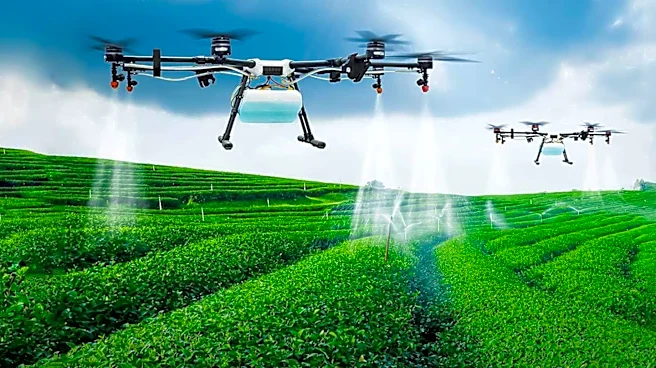
This development is crucial for the U.S. agricultural sector, particularly in addressing the challenges posed by climate change and the increasing demand for food security. By focusing on resilient crop varieties and efficient resource management, the complex can help U.S. farmers maintain productivity in the face of environmental stresses like drought, heat, and disease. The integration of precision technologies, such as drones and satellite imagery, will enable more informed decision-making, potentially leading to reduced input costs and improved yields. The interdisciplinary approach, combining expertise from agronomy to engineering, is vital for tackling complex agricultural issues. This research can lead to innovations that strengthen farms, agricultural businesses, and communities across Kansas and beyond, ensuring a more sustainable and productive future for U.S. agriculture.
What's Next?
With researchers and students now utilizing the L. Eldon Gideon Agronomy Research and Innovation Complex, the focus will shift from construction to active discovery. The immediate next steps involve translating the ongoing research into practical information, technologies, and practices that can be adopted by producers. The complex is expected to produce improved crop varieties, more efficient water and nutrient use strategies, and better decision-making tools for farmers. Furthermore, the initiative aims to prepare graduates to lead the agricultural industry, ensuring a skilled workforce for future innovations. The success of this investment will be measured by its tangible outcomes, including enhanced crop resilience and economic benefits for agricultural stakeholders. Continued collaboration between researchers, industry, and government will be essential to disseminate these advancements and maximize their impact.
Beyond the Headlines
The establishment of the Agronomy Research and Innovation Complex signifies a broader shift towards a more science-driven and technologically advanced agricultural paradigm in the U.S. It highlights the recognition that traditional farming methods alone may not suffice to meet future food demands and environmental challenges. The emphasis on interdisciplinary research and industry collaboration underscores a move away from siloed approaches, fostering a holistic understanding of agricultural systems. This initiative also has significant implications for education, as it provides students with hands-on experience in cutting-edge agricultural knowledge and technologies, shaping the next generation of agricultural leaders. The long-term impact could include a more resilient food supply chain, reduced environmental footprint of agriculture, and enhanced economic competitiveness for U.S. agricultural products in global markets, driven by continuous innovation and adaptation.