






What's Happening?
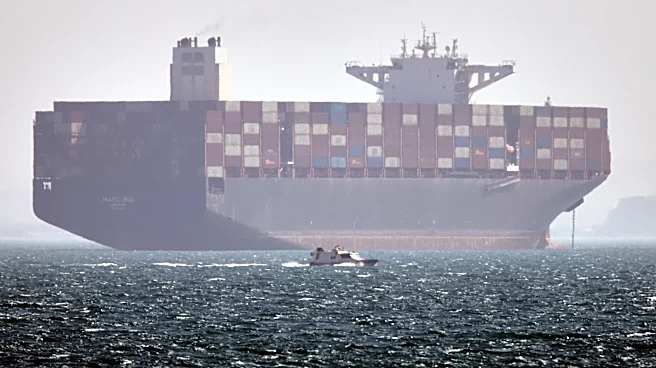
IMF Managing Director Kristalina Georgieva warned that the ongoing US-Israeli conflict with Iran could lead to severe global economic consequences if it continues into 2027. The closure of the Strait of Hormuz, a critical oil passage, has already caused
oil prices to rise, with potential increases to $125 per barrel. This scenario could lead to higher inflation and economic slowdown. The IMF's 'adverse scenario' predicts global growth slowing to 2.5% in 2026, with inflation at 5.4%. The conflict's impact on supply chains, particularly in oil and fertilizer, is causing price increases, affecting global food prices and other industries.
Why It's Important?
The conflict's extension poses significant risks to global economic stability, with potential repercussions for inflation and growth. Rising oil prices and supply chain disruptions could lead to increased costs for consumers and businesses, affecting economic recovery efforts. The IMF's warning highlights the need for policymakers to address these challenges proactively. The situation underscores the interconnectedness of global economies and the potential for regional conflicts to have widespread economic impacts. The outcome of this conflict will influence global economic policies and strategies, particularly in energy and trade sectors.
What's Next?
Policymakers must prepare for potential long-term economic impacts if the conflict continues. Strategies to mitigate rising oil prices and supply chain disruptions will be crucial. The IMF's scenarios provide a framework for understanding potential outcomes, guiding economic planning and policy adjustments. Continued monitoring of the conflict's impact on global markets and inflation will be essential. International cooperation and diplomatic efforts to resolve the conflict could help stabilize the situation and prevent further economic deterioration.