








What's Happening?
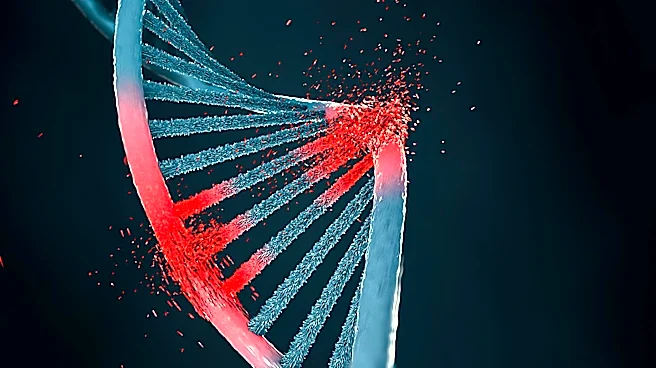
Recent advancements in gene-editing technology, specifically the CRISPR-Cas9 technique, have reignited debates over the ethical implications of human germline editing. This technique allows scientists to edit the DNA of living organisms, and recent studies
suggest it may soon be possible to edit human embryos with unprecedented precision. Despite the potential for medical breakthroughs, such as treating genetic disorders, the scientific community remains cautious due to the risks of unintended genetic changes. The controversy is further fueled by ethical concerns about the possibility of creating 'designer babies' with selected traits.
Why It's Important?
The potential to edit human embryos raises significant ethical and societal questions. While the technology could prevent genetic diseases, it also poses risks of unintended consequences and ethical dilemmas about altering human genetics. The debate centers on the balance between scientific progress and ethical boundaries, with concerns about the long-term societal impact, including issues of inequality and genetic enhancement. The possibility of 'designer babies' could lead to a future where genetic traits are commodified, raising questions about fairness and access to such technologies.
What's Next?
As research progresses, the scientific community and policymakers will need to establish clear guidelines and regulations to address the ethical and safety concerns associated with gene-editing technologies. Public attitudes and ethical considerations will play a crucial role in shaping the future of this technology. Ongoing discussions will likely focus on setting boundaries to prevent misuse while allowing for beneficial medical applications. The development of international consensus and regulatory frameworks will be essential to navigate the complex ethical landscape of human germline editing.
Beyond the Headlines
The debate over gene-editing extends beyond immediate ethical concerns to broader philosophical and theological questions about human identity and the nature of life. The potential to alter human genetics challenges traditional views on human development and raises questions about the role of science in shaping future generations. The implications of gene-editing technologies could lead to societal shifts in how genetic traits are perceived and valued, potentially impacting social structures and cultural norms.