
What's Happening?
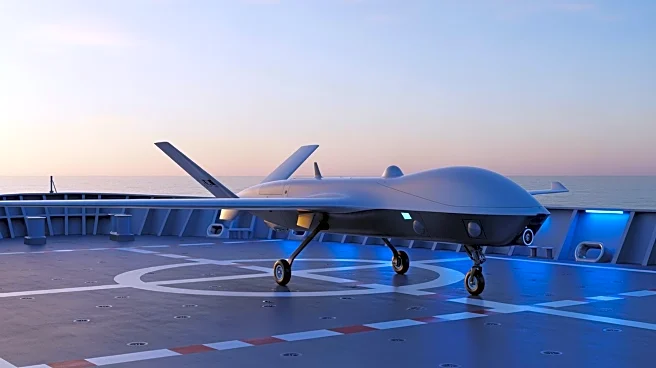
The U.S. Navy has successfully launched a one-way attack drone from a ship in the Middle East for the first time. The USS Santa Barbara, a littoral combat ship, deployed a Low-cost Unmanned Combat Attack
System (LUCAS) from its flight deck while stationed in the Arabian Gulf. This marks a significant milestone in the Navy's efforts to enhance its unmanned capabilities. The LUCAS platform, which is reverse-engineered from Iranian Shahed-136 drones, has been developed to provide low-cost and effective drone capabilities. The launch was part of the operations of Task Force Scorpion Strike, a newly established unit by U.S. Central Command aimed at delivering these capabilities to service members. Vice Adm. Curt Renshaw, commander of U.S. Naval Forces Central Command and 5th Fleet, highlighted the importance of this development in enhancing regional maritime security and deterrence.
Why It's Important?
The successful deployment of the LUCAS drone from a naval vessel represents a strategic advancement in the U.S. military's use of unmanned systems. This capability allows for more flexible and cost-effective operations, particularly in regions like the Middle East where maritime security is a critical concern. The use of reverse-engineered technology from Iranian drones underscores the adaptability and innovation in U.S. military strategy. This development could potentially shift the balance of power in the region by providing the U.S. Navy with enhanced surveillance and strike capabilities without risking human lives. It also reflects a broader trend in military technology towards the use of unmanned systems, which can operate in environments that are too dangerous for manned missions.
What's Next?
Following this successful launch, it is likely that the U.S. Navy will continue to integrate LUCAS and similar unmanned systems into its operations. This could involve further testing and deployment in various maritime environments to assess the full capabilities and limitations of these drones. Additionally, other branches of the U.S. military may explore similar technologies to enhance their operational effectiveness. The establishment of Task Force Scorpion Strike suggests a commitment to expanding the use of unmanned systems, which could lead to increased investment in research and development of new drone technologies. The international community, particularly nations in the Middle East, may respond to this development with increased scrutiny and potential adjustments to their own military strategies.