










What's Happening?
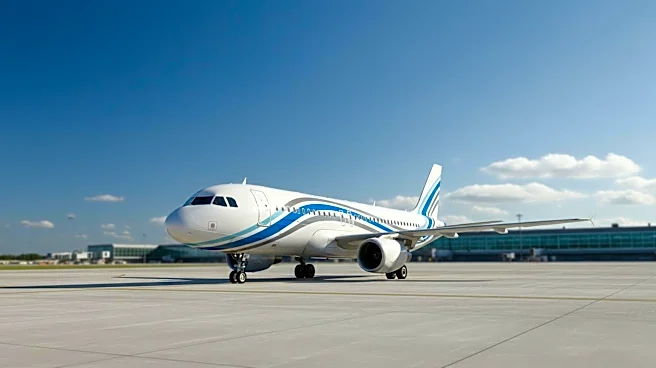
Yemeni national carrier FlyAden has inaugurated a new direct flight service from Aden, Yemen, to King Fahd International Airport in Dammam, Saudi Arabia. This new route, which began on July 5, will operate once a week using an Airbus A320. The launch
is part of FlyAden's broader strategy to rebuild Yemen's international air links, which have been disrupted for years. Since its inception in November 2025, FlyAden has been expanding its operations, initially using a wet-leased Boeing 737-800 from Red Sea Airlines. The airline recently acquired its first owned A320, previously operated by Royal Jordanian Airlines, marking a significant milestone in its expansion efforts. FlyAden plans to further grow its fleet and network, with additional routes and services, including Hajj and Umrah pilgrimage flights.
Why It's Important?
The introduction of this new route is a crucial step in restoring Yemen's international connectivity, which has been severely affected by ongoing conflicts and instability. By expanding its network, FlyAden is not only enhancing travel options for Yemeni citizens but also contributing to the country's economic recovery. The new route to Dammam is expected to stimulate passenger demand and strengthen FlyAden's market presence. This development is significant for the aviation industry in the region, as it reflects a commitment to rebuilding and expanding air travel infrastructure, which is vital for economic growth and international relations.
What's Next?
FlyAden plans to continue expanding its fleet and route network, with the addition of a second A320 later this year. The airline aims to grow its operations annually, focusing on increasing frequencies and launching new routes. Dammam Airports' traffic development director, Shabib Al Lawati, emphasized the importance of supporting FlyAden by stimulating passenger demand and building a sustainable business case. The success of this route could lead to further expansion and increased connectivity for both Yemen and Saudi Arabia, benefiting passengers and the wider aviation ecosystem.