





What's Happening?
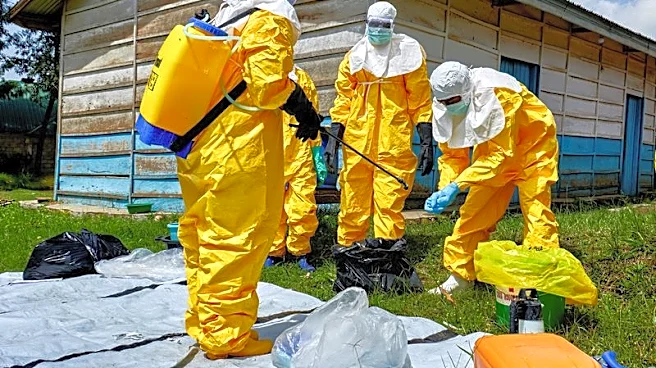
The World Health Organization (WHO) has reported that an Ebola outbreak likely began months ago in central Africa, spreading undetected until a super-spreader event in early May. The outbreak involves the rare Bundibugyo strain, which was identified in blood
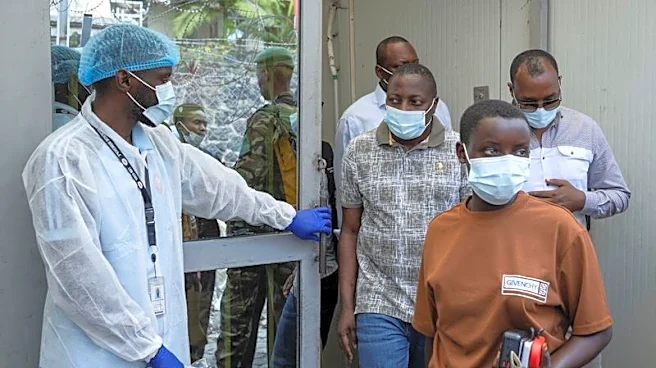
samples on May 15. The first confirmed death occurred on April 20, and the virus's spread was reconstructed using social media posts. The outbreak has been complicated by the use of tests for a different Ebola strain, leading to false negatives, and the similarity of symptoms to malaria. The WHO has recorded nearly 600 suspected cases and 139 deaths in the Democratic Republic of Congo and Uganda. The organization warns that the actual number of cases could exceed 800, with a worst-case scenario reaching 1,000. A WHO technical advisory group is prioritizing potential vaccines, but the most promising candidate may take six to nine months to be ready for clinical trials.
Why It's Important?
The outbreak's significance lies in its potential to escalate due to the lack of specific tests, treatments, or vaccines for the Bundibugyo strain. The delay in detection has hindered containment efforts, posing a threat to public health in the affected regions. The high case fatality rate of 30% to 50% further exacerbates the situation. The outbreak highlights the need for rapid development and deployment of vaccines, as well as improved diagnostic tools. The situation underscores the vulnerability of health systems in managing emerging infectious diseases and the importance of international collaboration in addressing such crises. The potential spread of the virus beyond the current regions could have severe implications for global health security.
What's Next?
Efforts are underway to develop a vaccine for the Bundibugyo strain, with the most promising candidate expected to take several months before clinical trials can begin. The International AIDS Vaccine Initiative is working to raise funds for the investigational vaccine. Meanwhile, existing vaccines, such as the Merck shot, may offer some protection and could be used to safeguard health workers. The Serum Institute of India is collaborating with the University of Oxford to produce doses of another potential vaccine within 20 to 30 days. However, extensive testing is required before any new vaccine can be administered to humans. The WHO and other health organizations will continue to monitor the outbreak and coordinate response efforts.
Beyond the Headlines
The outbreak raises ethical and logistical challenges in deploying experimental vaccines in emergency situations. The decision to use existing vaccines not specifically designed for the Bundibugyo strain involves weighing potential benefits against unknown risks. The situation also highlights the need for robust health infrastructure and surveillance systems to detect and respond to outbreaks promptly. The reliance on social media for tracking the virus's spread points to the evolving role of technology in public health. Long-term, the outbreak may prompt a reevaluation of global preparedness for infectious diseases and the allocation of resources for vaccine research and development.