





What's Happening?
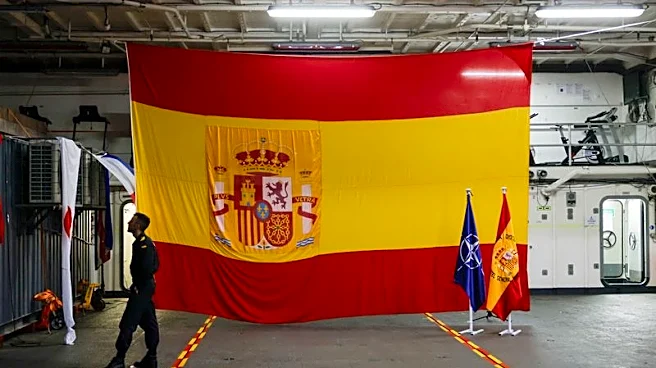
President Trump has indicated he is considering withdrawing the United States from NATO, a move that could lead to a significant crisis for the 77-year-old alliance. This development comes as EU leaders, concerned about the U.S.'s commitment to NATO, are
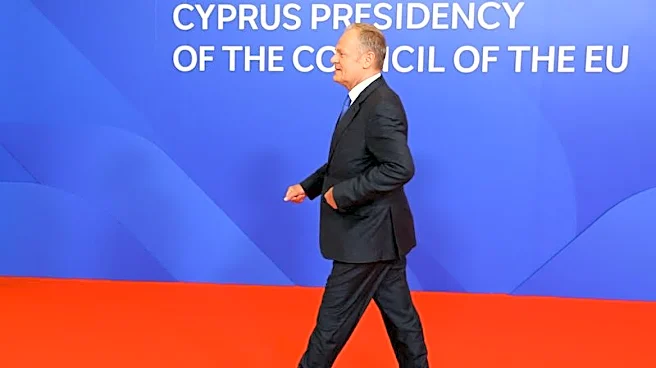
exploring their own mutual assistance mechanisms. The European Commission is tasked with preparing a blueprint for how the EU would respond if its mutual assistance clause, Article 42.7, is triggered. This clause obliges EU member states to aid each other in the event of an attack. The discussions are taking place against the backdrop of tensions over the U.S. and Israel's joint military actions in Iran, which have destabilized the region.
Why It's Important?
The potential U.S. withdrawal from NATO could have profound implications for global security and the balance of power in Europe. NATO has been a cornerstone of transatlantic security since its inception, and the U.S. plays a pivotal role in its operations. A withdrawal could embolden adversaries and weaken collective defense strategies. For the EU, this situation underscores the need to enhance its own defense capabilities and reduce reliance on the U.S. The EU's exploration of its mutual assistance clause reflects a strategic shift towards greater self-reliance in defense matters, which could alter the dynamics of international alliances.
What's Next?
If President Trump proceeds with withdrawing from NATO, it could prompt a reevaluation of defense strategies among European nations. EU leaders may accelerate efforts to strengthen their own defense mechanisms and seek new alliances. The European Commission's blueprint for mutual assistance could become a critical component of the EU's defense policy. Additionally, the U.S.'s stance on NATO could influence upcoming elections and political discourse in both the U.S. and Europe, as leaders and citizens weigh the implications of such a significant policy shift.