







What's Happening?
Researchers at Cornell University's Smart Computer Interfaces for Future Interactions (SciFi) Lab have developed a system called EchoMotion, which enables full-body motion tracking using only the built-in speaker and microphone of off-the-shelf smartwatches.
This software-driven system utilizes ultrasonic sound waves to map a person's body position, similar to sonar technology. EchoMotion operates on an entirely unmodified smartwatch, requiring no additional hardware like ultra-wideband chips or cameras. The system is powered by a lightweight AI model, occupying less than 30MB, and has been successfully deployed on Wear OS smartwatches, including the Samsung Galaxy Watch 6, Samsung Galaxy Watch 7, and Google Pixel Watch 3. Initial tests with 10 participants performing 18 physical movements showed the system could predict the positions of 12 major body joints with an average error of just under 4 inches, which reduced to about 2.4 inches after 12 minutes of user calibration. The technology aims to enhance workout tracking accuracy, monitor daily activities, and assist in rehabilitation exercises.
Why It's Important?
This breakthrough has significant implications for the wearable technology market and various industries. By eliminating the need for specialized hardware, EchoMotion drastically reduces the cost and complexity associated with full-body motion tracking. This could democratize access to advanced fitness and health monitoring, making it available to a broader consumer base without requiring new device purchases. For the fitness industry, it promises more accurate workout feedback, enabling better form correction for activities like Pilates, tai chi, and yoga. In healthcare, it could revolutionize remote rehabilitation, allowing patients to perform exercises at home with real-time feedback, potentially leading to more effective recovery and timely interventions from healthcare professionals. The low power consumption of EchoMotion (around 5-6% battery usage for a 30-minute session) also makes it practical for continuous use, addressing a common limitation of current wearable technologies.
What's Next?
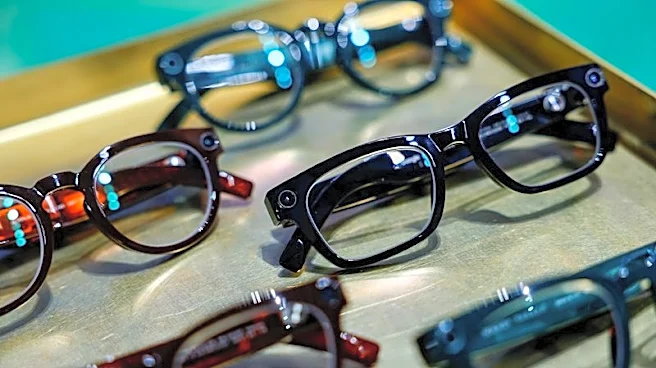
The Cornell research team is actively exploring further applications for EchoMotion, including its integration with smart glasses. This could lead to significant advancements in Extended Reality (XR) wearables, where accurate body tracking for gesture input in gaming and other interactive experiences remains a major challenge. The ability to implement full-body tracking without adding cost or bulk to XR devices could accelerate their development and adoption. The researchers have also made efforts to ensure EchoMotion's compatibility with commercial devices, suggesting a clear path for its integration into existing smartwatch ecosystems. Future developments may focus on refining accuracy in complex environments, as current limitations include reduced accuracy in busy hallways due to interference from other people. Continued research will likely aim to mitigate such environmental interferences and expand the range of recognized movements and applications.
Beyond the Headlines
The development of EchoMotion highlights a broader trend in technology: leveraging existing hardware for advanced functionalities through innovative software and AI. This approach not only reduces manufacturing costs but also extends the lifespan and utility of current devices, promoting sustainability in consumer electronics. Ethically, the widespread adoption of such precise body tracking raises questions about data privacy and security, particularly concerning sensitive health and movement data. Companies integrating this technology will need robust frameworks to protect user information. Culturally, it could shift perceptions of what smartwatches are capable of, moving them beyond simple fitness trackers to sophisticated personal health and performance coaches. This could also foster new forms of human-computer interaction, where subtle body movements become a more intuitive interface for controlling devices and interacting with digital environments.