





What's Happening?
The United Kingdom's partnership with Ukraine in developing and supplying long-range drones capable of striking targets inside Russia has drawn renewed threats of retaliation from Moscow. While Russia previously warned against the use of British-supplied
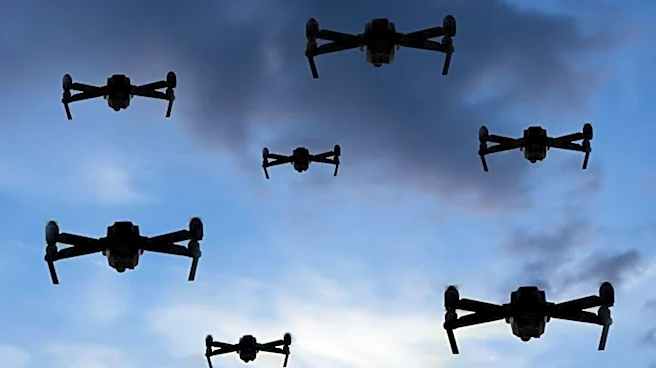
Storm Shadow cruise missiles, the current concern centers on the potential for sustained, mass strikes deep within Russian territory using cheaper and more easily manufactured drones. The UK is actively developing a substantial uncrewed-systems sector, with programs like Nyan, AR3, K3 Scout, and Octopus, and is co-leading the international Drone Capability Coalition. This collaboration involves refining battlefield-tested Ukrainian designs with British engineering expertise for mass production in UK factories. Despite the UK's efforts to scale up drone production, challenges remain, including dependence on Chinese components and the need for significant private investment to supplement government funding. Russia's Foreign Minister, Sergei Lavrov, has explicitly warned of "consequences" for the UK's involvement, though direct military retaliation against a NATO country is considered unlikely due to escalation risks.
Why It's Important?
This evolving drone partnership between the UK and Ukraine carries significant implications for the U.S. and its allies, particularly within NATO. The potential for Ukraine to conduct sustained, deep strikes into Russia using British-made drones could escalate the conflict, drawing a more aggressive response from Moscow. While direct military action against a NATO member is deemed improbable, Russia may resort to 'below the threshold' activities, such as cyberattacks on critical infrastructure, sabotage, or targeting defense industry executives, which could indirectly affect U.S. interests and security. The reliance on Chinese components for drone manufacturing also presents a security risk, as highlighted by the incident involving Royal Navy K3 Scout vessels communicating with an IP address in China. This dependency could create vulnerabilities in the supply chain and compromise operational security for both the UK and, by extension, its allies. The situation underscores the complex challenges of supporting Ukraine while managing escalation risks and securing critical defense technologies.
What's Next?
The UK is expected to continue its efforts to scale up drone production and strengthen its uncrewed-systems sector, aiming to overcome dependencies on foreign components and attract private investment. This will involve further collaboration with Ukraine, leveraging its battlefield experience to refine drone designs. Russia is likely to continue its 'below the threshold' activities, such as cyberattacks and sabotage, against the UK and other NATO members perceived as supporting Ukraine's long-range strike capabilities. These actions could lead to increased cybersecurity measures and intelligence sharing among NATO allies, including the U.S. The international community will closely monitor Russia's responses and the effectiveness of the UK-Ukraine drone partnership in influencing the conflict. The long-term success of this strategy will depend on the ability to produce drones in sufficient quantities, overcome Russian air defenses, and secure supply chains, potentially leading to a shift in military industrial strategies among Western nations.
Beyond the Headlines
The UK-Ukraine drone partnership highlights a significant shift in military strategy, emphasizing the role of cost-effective, mass-produced drones in modern warfare. This development could trigger a broader re-evaluation of defense industrial bases within NATO, including the U.S., to prioritize agile manufacturing and innovation in uncrewed systems. The ethical implications of using long-range drones for strikes deep within an adversary's territory will likely become a more prominent discussion point, particularly concerning the potential for unintended escalation and civilian casualties. Furthermore, the dependence on global supply chains for critical components, especially from countries like China, exposes a strategic vulnerability that could prompt Western nations to invest more in domestic production and secure alternative sources. This situation could lead to a new arms race in drone technology and counter-drone measures, fundamentally altering the landscape of future conflicts and defense policies.