





What's Happening?
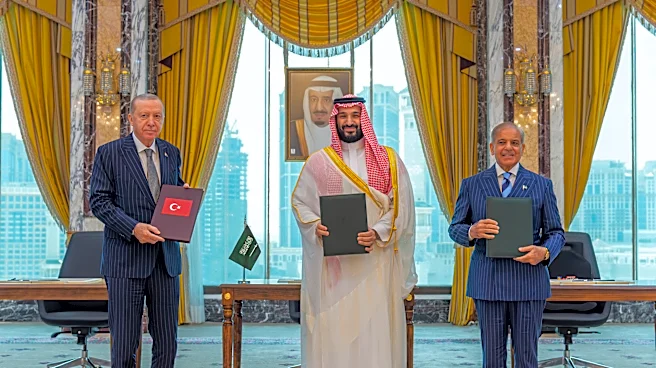
Pakistan has clarified that the Mecca Joint Defense Agreement, signed with Saudi Arabia and Turkey, is purely defensive and open to other nations. The agreement, signed in Mecca, aims to strengthen regional security cooperation and is not directed against
any specific country. Pakistan's Deputy Prime Minister and Foreign Minister Ishaq Dar emphasized the pact's focus on peace and stability, aligning with the right of collective self-defense under the UN Charter. The agreement allows for other countries to join, provided they adhere to its principles.
Why It's Important?
The Mecca Joint Defense Agreement represents a significant step towards regional security cooperation in the Middle East. By emphasizing its defensive nature, Pakistan aims to reassure neighboring countries and potential partners that the pact is not a threat but a means to enhance collective security. This approach could foster greater regional collaboration and stability, potentially attracting more countries to join the alliance. The agreement also highlights the shifting dynamics in the region, as countries seek to address security challenges through collective efforts rather than relying solely on external powers.
What's Next?
The agreement may lead to further diplomatic engagements among the signatories to solidify their defense cooperation. It could also prompt reactions from other regional players, such as Israel and Iran, who may perceive the pact as a threat to their strategic interests. The US might need to engage in diplomatic efforts to reassure its allies and prevent further erosion of its influence in the region. Additionally, the pact could encourage other countries to consider joining or forming similar alliances, potentially reshaping the security landscape in the Middle East.