




What's Happening?
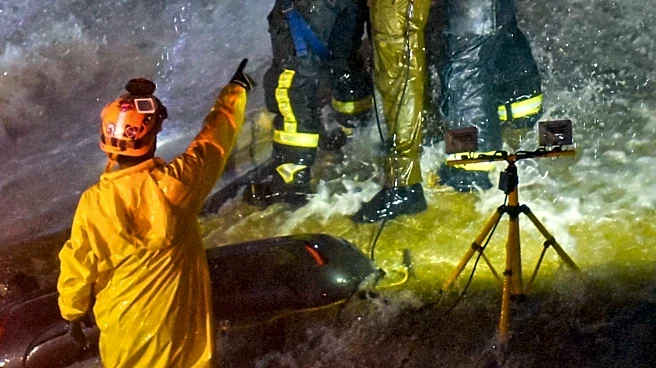
Homes in Flatbush, Brooklyn, were evacuated after a manhole explosion. Officials from Con Edison confirmed that the manhole problems were directly related to the rain weather experienced on Sunday. The incident prompted emergency responses and led to the temporary
displacement of residents from their homes as a precautionary measure. The exact cause of how the rain contributed to the manhole explosion is under investigation, but such incidents often occur when water infiltrates underground electrical systems, leading to short circuits and pressure buildup. The evacuations were necessary to ensure public safety while utility crews addressed the hazardous situation.
Why It's Important?
Manhole explosions, particularly those linked to weather events like rain, highlight critical vulnerabilities in urban infrastructure, especially in older cities like New York. These incidents pose significant safety risks to residents, including potential for injury, property damage, and disruption of essential services. The connection to rain underscores the challenges faced by utility companies in maintaining underground electrical networks in areas prone to flooding or heavy precipitation. This event brings attention to the need for ongoing infrastructure assessment, maintenance, and upgrades to prevent such occurrences, which can have broader implications for public safety, emergency response protocols, and urban planning in densely populated areas. It also raises concerns about the resilience of city infrastructure in the face of increasingly unpredictable weather patterns.
What's Next?
Con Edison crews will continue to investigate the specific cause of the manhole explosion and work to repair the damaged infrastructure in Flatbush. Residents who were evacuated will likely be allowed to return to their homes once the area is deemed safe and any immediate hazards are mitigated. The incident may prompt a review of maintenance procedures and infrastructure resilience in the affected area, particularly concerning the impact of weather. City officials and utility companies may also consider implementing enhanced preventative measures to address similar vulnerabilities in other parts of the city, especially as climate change contributes to more extreme weather events. Public advisories regarding safety around manholes during and after heavy rain may also be issued.
Beyond the Headlines
This incident in Brooklyn points to a larger, systemic issue of aging urban infrastructure across the U.S. Many cities rely on utility systems that are decades, if not a century, old, making them susceptible to failures exacerbated by modern environmental stressors. The link between rain and manhole explosions highlights the often-unseen dangers lurking beneath city streets and the complex engineering challenges involved in maintaining these vital networks. It also raises questions about environmental justice, as older, often lower-income neighborhoods may bear a disproportionate burden of such infrastructure failures. The event serves as a stark reminder that infrastructure is not merely about roads and bridges but also the hidden networks that power and sustain urban life, demanding continuous investment and adaptation to ensure public safety and urban resilience in the face of evolving environmental conditions.