

What's Happening?
Representative John Rutherford, a Republican from Florida, has shared insights into how his Catholic faith influences his daily life and work in Congress. He emphasizes leaning on his faith in his demanding position, often through attending Mass and saying
the rosary. Rutherford cited Ephesians 2:10, stating, “for we are all God’s workmanship, created in the image of Christ Jesus to do good work,” which he interprets as a divine calling for his actions. His journey to Catholicism was not straightforward; he grew up in the United Methodist Church and drifted away at age 14. His perspective on faith shifted significantly after becoming a police officer in Jacksonville, Florida, where witnessing crimes led him to question mortality and return to studying the Bible. This eventually led him to convert to Catholicism after reading Pope John Paul II's 'Crossing the Threshold of Hope,' which clarified the authority of the Church for him.
Why It's Important?
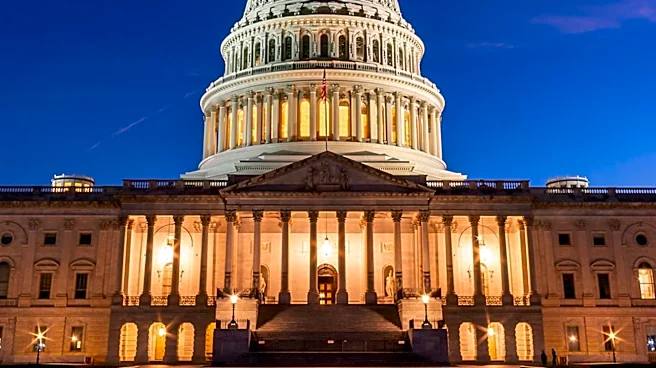
The discussion by Representative Rutherford highlights the significant role personal faith plays for many U.S. lawmakers in their public service and decision-making processes. With Catholics constituting over 28% of the 119th Congress, their religious convictions can influence their approach to policy, ethical considerations, and overall conduct in a highly scrutinized environment. Rutherford's experience, moving from a secular period to a deeply rooted faith, illustrates how personal journeys can shape public figures. This perspective offers insight into the moral frameworks that guide some political leaders, potentially impacting their legislative priorities and their engagement with constituents on issues of conscience. Understanding these personal motivations is crucial for a comprehensive view of the political landscape and the diverse influences on governance.
What's Next?
As Representative Rutherford continues his tenure in Congress, his publicly articulated faith suggests a continued commitment to principles he derives from his religious beliefs. This may manifest in his voting record, his advocacy for certain policies, and his interactions with colleagues and the public. His emphasis on prayer and spiritual grounding could serve as an example for other lawmakers seeking to balance demanding political careers with personal values. The ongoing presence of faith-driven individuals in Congress means that religious perspectives will likely remain a notable, though not always explicit, factor in legislative debates and political discourse. Future discussions on policy, particularly those with ethical or moral dimensions, may see these underlying faith commitments come to the forefront.
Beyond the Headlines
Representative Rutherford's narrative delves into the deeper interplay between personal belief systems and public office. His conversion story, particularly the influence of his police work and subsequent theological study, underscores how life experiences can profoundly shape an individual's spiritual and, by extension, political identity. This highlights a broader cultural dimension in U.S. politics where personal faith, often a private matter, frequently intersects with public roles. The reliance on spiritual practices like Mass and the rosary for guidance in a 'hectic position' points to the psychological and moral support systems that some politicians utilize. This also touches upon the ongoing debate about the separation of church and state, as lawmakers bring their deeply held convictions into the legislative arena, influencing the ethical and moral fabric of national policy.