







What's Happening?
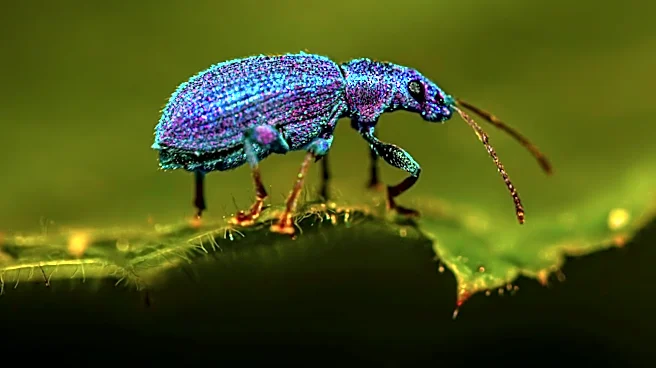
In 2001, the U.S. Department of Agriculture introduced the tamarisk leaf beetle to control invasive tamarisk trees in the western United States. While the beetle has been effective in reducing tamarisk populations, it has inadvertently threatened the habitat
of the endangered Southwestern Willow Flycatcher. The beetle's expansion has led to significant habitat loss for the bird, with a reported 94% decline along the lower Virgin River. The U.S. Geological Survey has used satellite mapping to track these changes, providing a comprehensive view of the bird's habitat and the impact of the beetle.
Why It's Important?
The introduction of the tamarisk leaf beetle underscores the complexities and unintended consequences of biological control measures. While the beetle helps manage invasive species, it poses a significant threat to the Southwestern Willow Flycatcher, a federally protected species. This situation highlights the need for careful consideration and monitoring of ecological interventions. The loss of habitat for the flycatcher could lead to further declines in its population, prompting conservationists to reassess strategies for balancing invasive species control with the protection of native wildlife.
What's Next?
Conservation agencies are now tasked with finding solutions to mitigate the impact of the beetle on the flycatcher's habitat. Efforts may include restoring native vegetation and managing beetle populations to prevent further habitat loss. The satellite mapping system will aid in identifying vulnerable areas and prioritizing conservation efforts. Long-term strategies will need to address the balance between controlling invasive species and preserving endangered habitats, ensuring that interventions do not inadvertently harm native ecosystems.