



What's Happening?
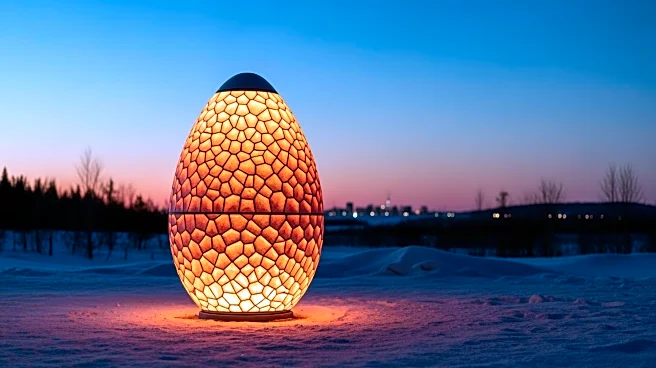
In the northernmost city of Sweden, Kiruna, the Solar Egg stands as a unique symbol of innovation and environmental consciousness. Created by artists Mats Bigert and Lars Bergström, the Solar Egg is a mobile sauna composed of nearly 70 gold-plated panels
that generate energy even in snowy conditions. This artistic installation not only serves as a functional sauna but also as a meeting place for residents amidst the city's significant urban transformation. Kiruna, historically known for its iron ore mining, is undergoing a major relocation due to ground shifts caused by mining activities. The Solar Egg, with its reflective panels and egg shape, symbolizes the city's rebirth and new opportunities as it navigates these changes.
Why It's Important?
The Solar Egg represents a fusion of art, science, and sustainability, highlighting the potential of renewable energy solutions in addressing environmental challenges. As Kiruna undergoes its Great Relocation, the Solar Egg provides a space for community engagement and reflection on the city's future. This installation underscores the importance of integrating sustainable practices into urban development, offering a model for other cities facing similar challenges. By promoting renewable energy and community dialogue, the Solar Egg contributes to a broader understanding of how art can influence public perception and policy regarding environmental sustainability.
What's Next?
As Kiruna continues its relocation process, the Solar Egg will likely remain a focal point for community discussions and a symbol of the city's commitment to sustainable development. The ongoing urban transformation may inspire further innovative projects that blend art and sustainability, potentially influencing other cities to adopt similar approaches. Stakeholders, including local government and environmental groups, may use the Solar Egg as a platform to advocate for policies that prioritize renewable energy and sustainable urban planning.
Beyond the Headlines
The Solar Egg's impact extends beyond its immediate function as a sauna. It challenges traditional notions of public art by incorporating renewable energy technology, thus serving as a catalyst for discussions on climate change and sustainability. The installation's mobility and adaptability also highlight the potential for art to address dynamic urban challenges, offering a blueprint for future projects that seek to balance aesthetic appeal with environmental responsibility.