

What's Happening?
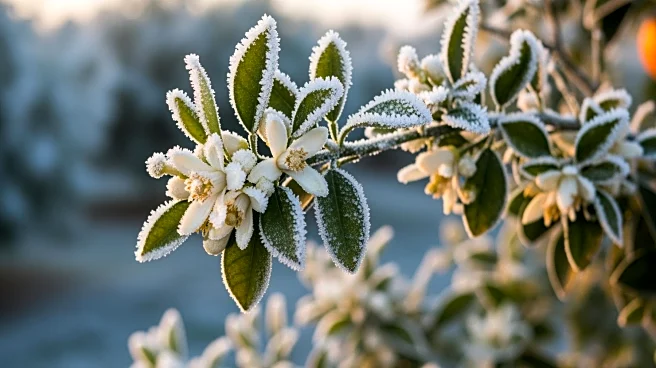
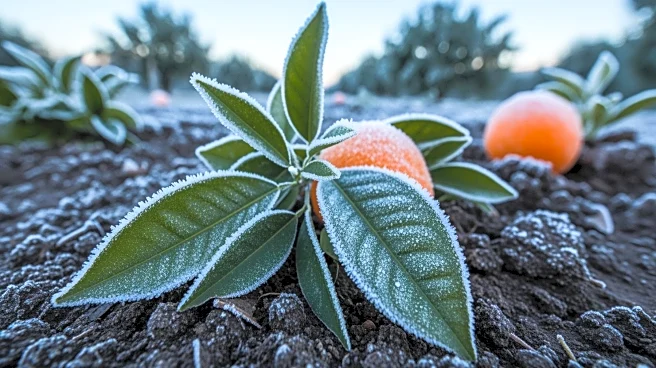
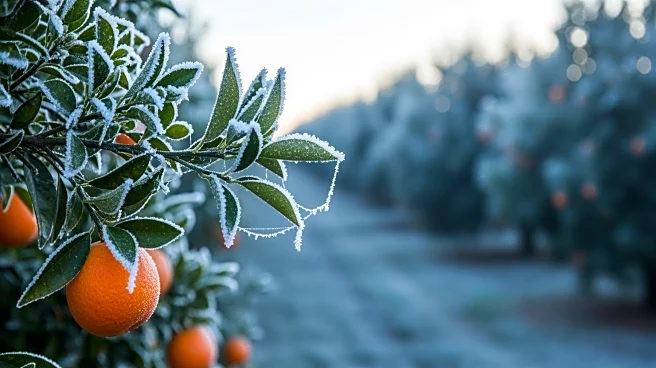
The Florida Department of Agriculture and Consumer Services has reported preliminary estimates indicating that recent freeze events have caused over $3.1 billion in losses across Florida's agricultural sectors. This significant financial impact affects
a wide range of crops, including tomatoes, strawberries, watermelons, sweet corn, bell peppers, potatoes, cabbage, squash, blueberries, greenhouse and nursery plants, and citrus. The data, compiled from various sources such as the USDA National Agricultural Statistics Service and the Florida Census of Agriculture, highlights the severity of the freeze's impact on the state's agriculture. Commissioner Wilton Simpson emphasized the need for substantial support for farmers, ranchers, and growers who are crucial to the nation's food supply, especially during winter months. The department is prepared to administer federal block grant funding to aid recovery and replanting efforts.
Why It's Important?
The freeze's impact on Florida's agriculture underscores the vulnerability of the state's economy to extreme weather events. Agriculture is a vital component of Florida's economy, and the losses could have ripple effects on food supply chains, employment, and local economies. The financial strain on farmers and producers may lead to increased prices for consumers and potential shortages of certain produce. The situation also highlights the importance of federal support in mitigating the effects of natural disasters on critical industries. The collaboration between state and federal agencies, along with industry leaders, is crucial in ensuring a swift recovery and maintaining the stability of the food supply chain.
What's Next?
As the Florida Department of Agriculture continues to assess the full extent of the damage, updates to the loss estimates are expected. The department, in collaboration with federal agencies and industry groups, will focus on securing and distributing federal block grant funding to support affected producers. This funding will be essential for recovery efforts, including replanting and rebuilding damaged infrastructure. The situation may prompt discussions on improving resilience and preparedness for future extreme weather events, potentially leading to policy changes or new initiatives aimed at protecting the agricultural sector from similar occurrences.