





What's Happening?
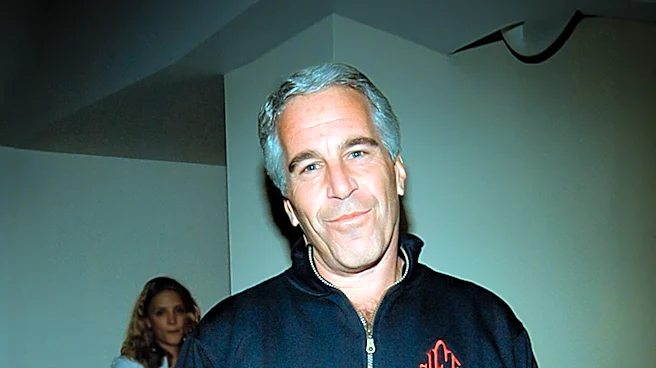
Michael Freeman, a forensic scientist specializing in bias and error in death investigations, is challenging the consensus that Jeffrey Epstein's death was a suicide. After gaining rare access to Epstein's autopsy file through his brother, Mark Epstein,
Dr. Freeman concluded that the injuries are more consistent with homicidal strangulation than with hanging. He noted that the mark on Epstein's neck was deep, ragged, and branched into a Y-shape, unlike a typical hanging mark. Dr. Freeman also suggests that other injuries on the body indicate a struggle, contradicting the medical examiner's initial findings. He is attempting to publish his findings in a peer-reviewed journal and presented them at the Middle Temple, a London legal society, arguing for a re-evaluation of the cause of death.
Why It's Important?
This challenge to the official cause of death for Jeffrey Epstein, a wealthy financier and convicted sex offender, could reignite long-standing debates and conspiracy theories surrounding his demise. The initial finding of suicide, despite multiple investigations, has been met with skepticism by some. Dr. Freeman's analysis, if validated, could lead to renewed scrutiny of the circumstances surrounding Epstein's death in a federal detention center in 2019. It raises questions about the thoroughness and accuracy of the initial death investigation and autopsy report, potentially impacting public trust in forensic science and the justice system. The case's high profile and the nature of Epstein's crimes mean that any new evidence or interpretation could have significant legal and public implications.
What's Next?
Dr. Freeman is actively seeking to publish his findings in a peer-reviewed journal, which would subject his analysis to scientific scrutiny and potentially lend it greater credibility. His presentation at the Middle Temple is part of an effort to bring his conclusions to a wider audience and encourage further investigation. The public release of autopsy photos by Mark Epstein could also intensify public discussion and pressure for re-examination. While Dr. Freeman has stated he is not interested in identifying a killer, his findings could prompt calls for a new investigation into Epstein's death, potentially involving law enforcement agencies or independent bodies. The scientific community's response to his work will be crucial in determining its impact.
Beyond the Headlines
The controversy surrounding Jeffrey Epstein's death touches upon broader issues within the justice system, including the handling of high-profile inmates, the integrity of forensic investigations, and public confidence in official narratives. Dr. Freeman's work, which often critiques biases in death investigations, highlights the potential for systemic errors or oversights, particularly in cases involving powerful individuals. The ongoing debate underscores the public's demand for transparency and accountability, especially when initial findings are met with widespread doubt. This case could serve as a catalyst for re-evaluating protocols for death investigations in correctional facilities and for ensuring independent oversight in sensitive cases, aiming to prevent future controversies and uphold the credibility of the legal and medical systems.