







What's Happening?
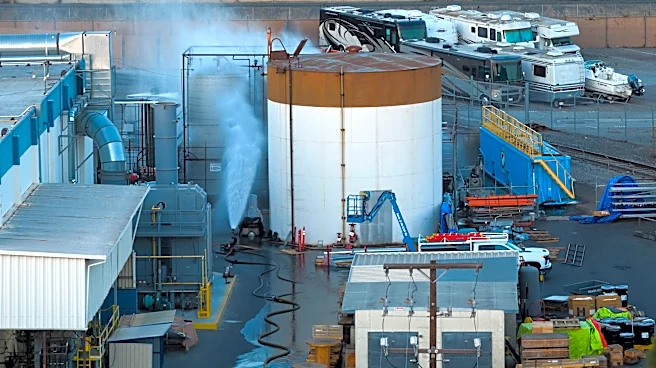
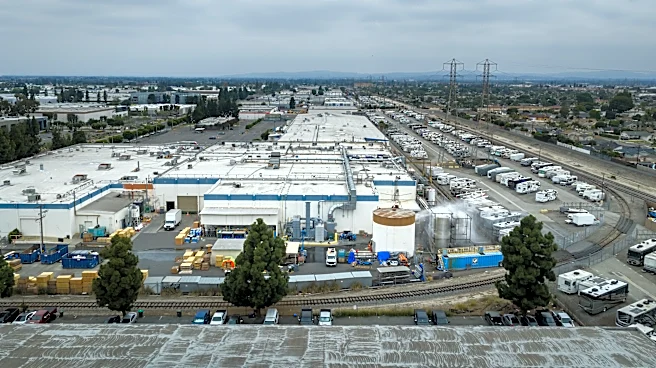
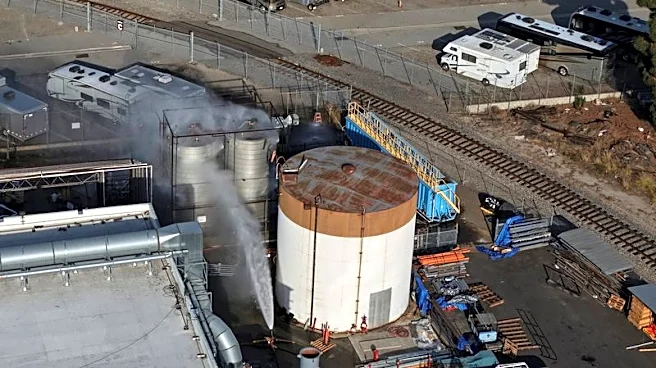
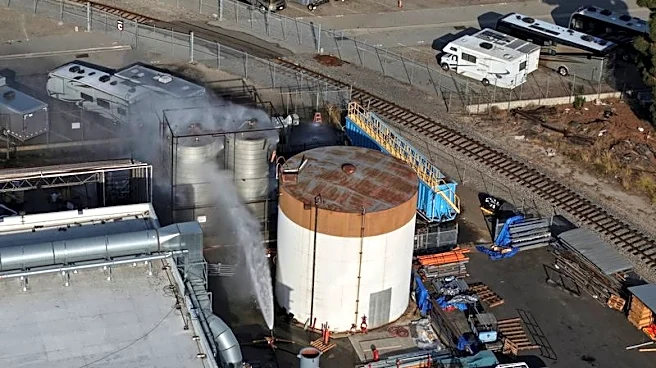
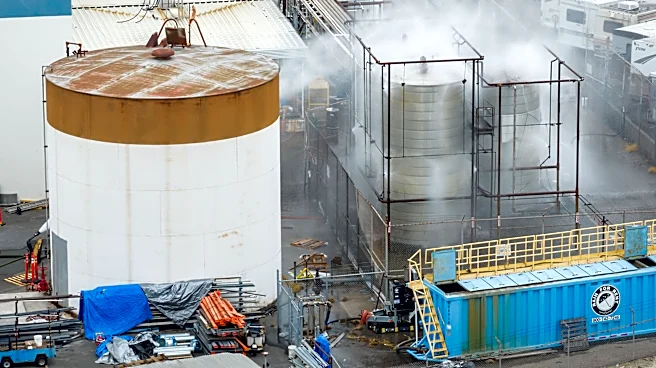
A potential disaster was averted in Garden Grove, California, where a chemical tank at the GKN Aerospace facility posed a significant explosion risk. The tank, containing 7,000 gallons of a highly reactive chemical, led to the evacuation of 50,000 residents
due to overheating concerns. Although the immediate threat of a catastrophic explosion has been mitigated, officials caution that smaller explosions or leaks remain possible. This incident has brought attention to the hidden industrial risks in Southern California, where aerospace and petrochemical facilities are often located near residential areas. Experts highlight that aging infrastructure, combined with regulatory rollbacks and increased housing development near industrial sites, raises the likelihood of similar emergencies.
Why It's Important?
The Garden Grove incident underscores the broader issue of industrial safety in densely populated areas. Southern California's history as a hub for aerospace and defense manufacturing has left a legacy of industrial sites interwoven with residential communities. The convergence of aging infrastructure, regulatory changes, and population growth increases the risk of industrial accidents, particularly affecting low-income communities already burdened by pollution. The incident highlights the need for improved regulatory oversight and emergency preparedness to protect public safety. It also raises questions about land use decisions and the balance between industrial development and residential safety.
What's Next?
In response to the Garden Grove incident, there is likely to be increased scrutiny on industrial safety regulations and land use policies in California. A new state bill, SB 954, is advancing through the legislature to restore some environmental protections removed in recent years. This includes narrowing exemptions for industrial facilities from environmental reviews. The incident may prompt further discussions on how to manage industrial risks and ensure that facilities are not located too close to residential areas. Stakeholders, including government agencies, industry leaders, and community groups, will need to collaborate to address these challenges and prevent future incidents.
Beyond the Headlines
The Garden Grove crisis highlights the ethical and environmental justice issues surrounding industrial development in urban areas. Many affected communities are low-income and predominantly composed of people of color, who already face disproportionate environmental hazards. The incident serves as a reminder of the historical industrialization of Southern California and its ongoing impact on public health and safety. It also raises questions about the role of government and industry in ensuring safe living conditions for all residents, particularly in vulnerable communities. Long-term solutions will require a comprehensive approach to industrial regulation, land use planning, and community engagement.