








What's Happening?
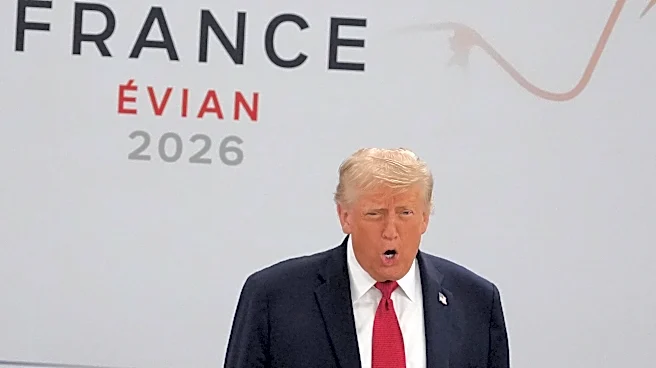
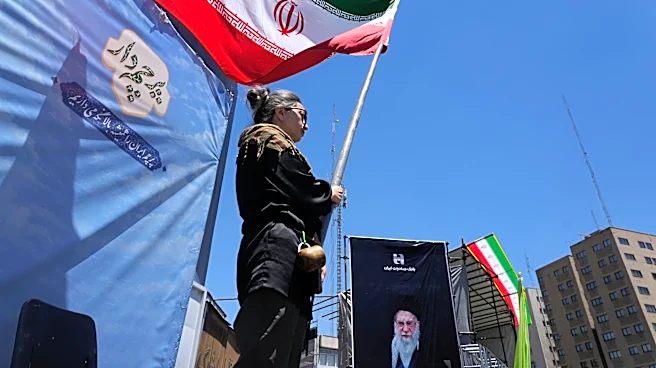
President Trump has signed an initial agreement with Iran aimed at ending the ongoing conflict and reopening the Strait of Hormuz. This agreement, however, excludes Israel from the negotiations, leading to criticism from President Trump regarding Israel's
continued military actions in Lebanon. Concurrently, President Trump is withholding the nomination of a new Director of National Intelligence, Bill Pulte, until certain demands are met, including the reauthorization of a key surveillance tool. This move has placed Senate Republicans in a difficult position. Additionally, a new NPR/PBS News/Marist poll indicates that President Trump's approval ratings have reached a new low, with dissatisfaction particularly high regarding his handling of the economy.
Why It's Important?
The agreement with Iran could potentially ease tensions in the Middle East and restore oil flows through the Strait of Hormuz, which is crucial for global oil supply. However, the exclusion of Israel from the negotiations may strain U.S.-Israel relations. Domestically, President Trump's decision to delay the DNI nomination and tie it to legislative demands highlights ongoing tensions between the executive branch and Congress. The low approval ratings reflect public dissatisfaction with the administration's economic policies, which could have significant implications for upcoming elections, potentially affecting Republican support.
What's Next?
The next steps involve the potential finalization of the agreement with Iran, which could lead to the lifting of sanctions and a significant economic boost for Iran. Domestically, the Senate will need to address the confirmation of the DNI nominee and the reauthorization of the surveillance tool, which could lead to further political maneuvering. The administration's handling of these issues will likely impact President Trump's approval ratings and influence the political landscape leading up to the elections.