
What's Happening?
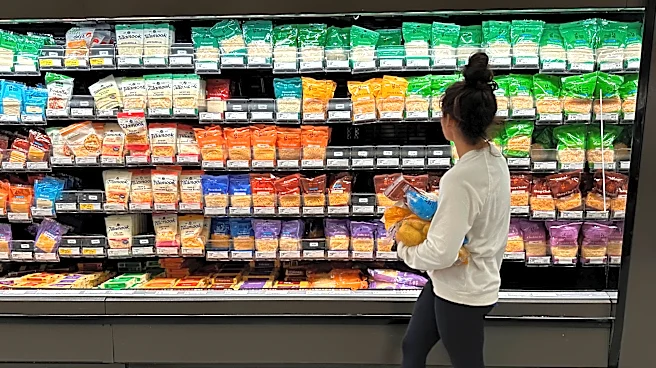
American consumers continue to express pessimism about the economy, as indicated by the University of Michigan Surveys of Consumers, which hit all-time lows in May. Despite a cooling annual inflation rate,
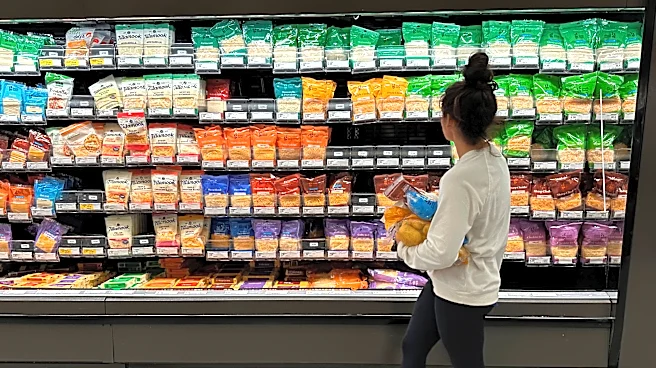
consumers remain affected by rapid price increases and a series of economic disruptions, including the COVID-19 pandemic, geopolitical conflicts, and tariffs imposed by President Trump. Economists note that consumers are struggling with the cumulative impact of inflation, which has been significant over the past few years. The sentiment is further exacerbated by ongoing high prices, such as gasoline exceeding $4 per gallon, which has led to lifestyle changes for many Americans. Despite these challenges, consumer spending remains robust, with companies like Uber and Walt Disney reporting strong customer spending.
Why It's Important?
The persistent pessimism among American consumers is significant as it reflects broader economic challenges and uncertainties. Consumer sentiment is a critical indicator of economic health, influencing spending behaviors that drive two-thirds of U.S. economic activity. The disconnect between consumer sentiment and spending suggests that traditional economic models may not fully capture current consumer behavior. High inflation and economic shocks have eroded confidence, impacting industries reliant on consumer spending. Businesses like Whirlpool and McDonald's have already reported declines in demand and potential spending hits due to rising prices. The situation underscores the need for stable economic conditions to restore consumer confidence and support economic recovery.
What's Next?
In the near term, consumer sentiment is unlikely to improve significantly as oil prices remain high and geopolitical tensions persist. The job market's performance will also play a crucial role in shaping consumer confidence. Federal government data indicates a stronger-than-expected job market, which could support consumer resilience. However, economists caution that without a period of positive and stable economic conditions, consumer sentiment may remain subdued. Policymakers and businesses will need to monitor these trends closely to adapt strategies that support consumer confidence and economic stability.