
What's Happening?
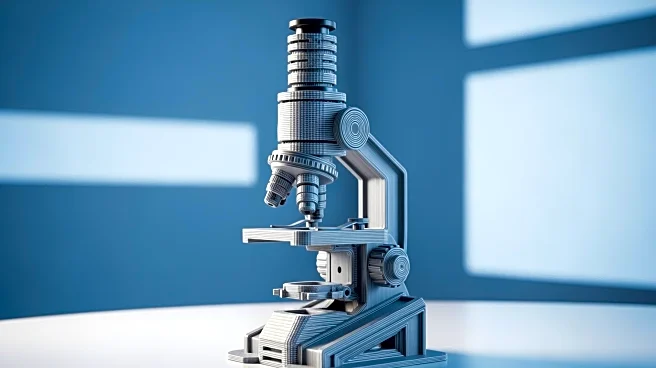
Researchers at the University of Glasgow have developed the world's first fully 3D-printed microscope, costing less than £50 and taking under three hours to build. The microscope, designed using OpenFlexure
resources, includes a 3D-printed lens, a store-bought camera, and a Raspberry Pi computer for control. This innovation makes high-quality microscopy accessible to students and researchers with limited funding. The project has garnered global interest, with collaborations underway to democratize access to scientific tools, particularly in regions with limited resources.
Why It's Important?
The development of an affordable, fully 3D-printed microscope has significant implications for education and research, particularly in underfunded areas. It democratizes access to scientific tools, enabling more widespread participation in scientific inquiry and education. The project also highlights the potential of 3D printing technology to revolutionize manufacturing and accessibility in various fields, including medicine and biology.
What's Next?
The research team is working on improving the microscope's resolution and contrast without increasing costs. They are collaborating with institutions in West Africa to enhance access to microscopy for researchers and students. The project is also integrated into educational programs, providing unique learning opportunities. As 3D printing technology advances, the capabilities and applications of such microscopes are expected to expand.