



What's Happening?
Minneapolis Mayor Jacob Frey has vetoed an ordinance passed by the City Council that would have mandated robotaxi companies to obtain a city license and require a 'human safety monitor' to be present in self-driving vehicles. The ordinance, approved by a 7-6
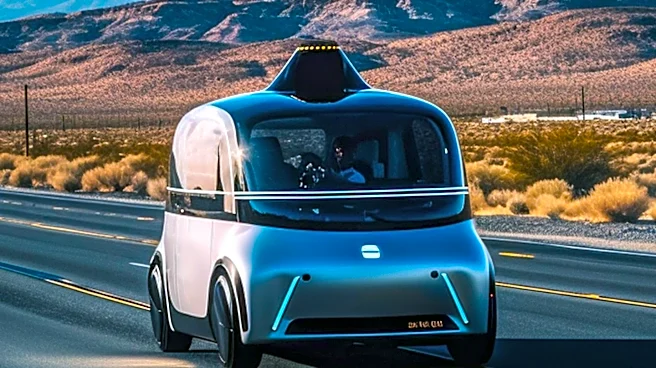
vote, was described by Waymo as a 'de-facto ban' on their operations. Mayor Frey stated that while local governments should regulate autonomous vehicles for rideshare, the ordinance failed to address critical operational issues such as curbside management, emergency response, traffic enforcement, liability, insurance, privacy, and data reporting. Instead, it focused on requiring a driver in driverless vehicles, which he argued defeats the purpose of the technology. Waymo's self-driving cars utilize GPS, cameras, radar, and lidar sensors, along with heating and cleaning systems, to navigate various conditions, including winter weather. The company claims its technology can handle challenging conditions and has been testing in snowy regions to gather data.
Why It's Important?
This veto highlights a significant regulatory challenge for autonomous vehicle technology in urban environments. The debate between fostering innovation and ensuring public safety and accountability is at the forefront. Mayor Frey's decision to veto the ordinance, despite the City Council's approval, underscores a divergence in approach to regulating emerging technologies. The requirement for a human safety monitor, as proposed by the City Council, would have substantially altered the economic model and operational efficiency of robotaxi services, potentially hindering their expansion into Minneapolis. The broader implications extend to how other U.S. cities might approach similar regulations, balancing the potential benefits of autonomous vehicles, such as increased safety and accessibility, against concerns regarding job displacement, liability, and the impact on public transit. The outcome in Minneapolis could influence legislative discussions at both state and local levels regarding the future of autonomous transportation.
What's Next?
Following Mayor Frey's veto, the future of robotaxi regulation in Minneapolis remains uncertain. The City Council could attempt to override the veto, though the initial 7-6 vote suggests a narrow margin that might make an override challenging. Discussions are likely to continue regarding a more comprehensive regulatory framework that addresses the operational issues raised by Mayor Frey, such as curbside management, emergency response protocols, and liability. Waymo, which has been testing its vehicles in Minneapolis with human drivers, will likely continue its efforts to launch full autonomous services. The St. Paul City Council is also considering a study on 'autonomous vehicle labor and community protections,' indicating that neighboring cities are grappling with similar questions. The state of Minnesota's current law neither prohibits nor specifically authorizes automated vehicles, suggesting that state-level legislation might eventually be pursued to provide a more uniform regulatory environment.
Beyond the Headlines
The debate over robotaxi regulation in Minneapolis touches upon deeper societal and economic implications. Critics of autonomous vehicles raise concerns about job displacement for rideshare drivers, the potential impact on public transit systems, and issues of privacy due to continuous data collection. The technology's high cost, with a single Waymo Jaguar I-Pace estimated at $150,000, also raises questions about profitability and accessibility beyond robotaxi services. Proponents argue that autonomous vehicles can significantly enhance road safety by reducing human error, which is cited as a major cause of traffic fatalities. The ethical dimension of liability in the event of a crash involving a driverless car is also a complex issue that requires clear legal frameworks. This situation reflects a broader tension between technological advancement and the need for robust public policy to manage its consequences, shaping urban infrastructure, labor markets, and the very nature of transportation.