



What's Happening?
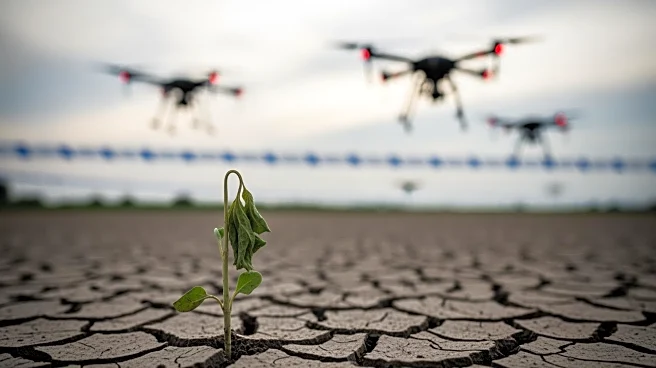
The Health, Environment, Agriculture, and Labor (HEAL) Food Alliance has released a report criticizing precision agriculture (PA) as a 'costly distraction' from effective climate solutions. Precision agriculture involves using technologies like GPS, drones,
and AI to apply chemical inputs more efficiently. Despite public sector investments reaching $11.1 billion in 2021, HEAL argues that PA diverts attention from regenerative farming methods such as intercropping and agroforestry, which are more climate-resilient and accessible to smaller farms. The report highlights that while PA technologies were used on about 50% of U.S. corn and soybean acreage by 2012, fertilizer use did not decrease. HEAL also points out that PA tools require significant resources, contributing to increased water and energy consumption, and favor large farms, exacerbating racial and economic inequities in agriculture.
Why It's Important?
The report's findings challenge the prevailing narrative that precision agriculture is a sustainable solution to agricultural challenges. By highlighting the environmental and social costs associated with PA, HEAL calls for a shift in policy focus towards regenerative practices that reduce input use and support small, diversified farms. This critique is significant as it questions the efficiency-sustainability conflation and suggests that current investments in PA may not yield the intended environmental benefits. The report also underscores the need for equitable agricultural policies that address systemic inequities, particularly for BIPOC farmers who are often excluded from the benefits of PA technologies.
What's Next?
HEAL recommends divesting from precision agriculture and increasing federal support for regenerative practices. They urge policymakers to promote Farm Bill initiatives that better support small, diversified, and BIPOC producers. The report calls for greater oversight of PA technologies and collaboration with small and mid-size farmers to develop practices that benefit their production. This could lead to policy shifts that prioritize community-based, sustainable farming practices over technological efficiency.
Beyond the Headlines
The report raises ethical and social questions about the role of technology in agriculture. It suggests that reliance on PA could deepen existing inequities and prioritize corporate interests over community well-being. The findings also highlight the Jevons Paradox, where increased efficiency leads to greater resource consumption, challenging the assumption that technological advancements inherently lead to sustainability.