




What's Happening?
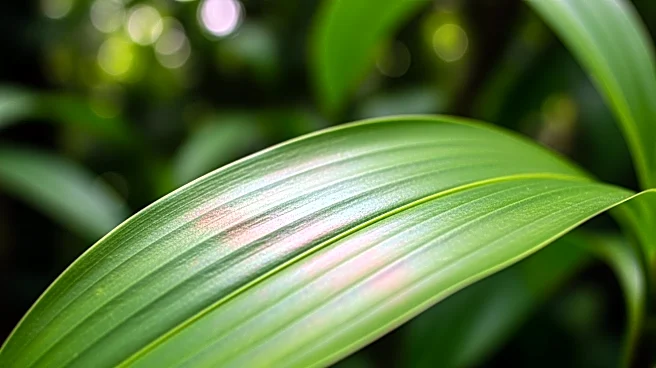
A research team at the University of Vienna, led by Wolfram Weckwerth, has made significant strides in understanding the evolution of Crassulacean Acid Metabolism (CAM) photosynthesis within the tropical tree genus Clusia. By analyzing the genomes of three
Clusia species, the researchers have traced how genome duplication and subsequent genetic rearrangement contribute to the diversity of CAM traits. This study, published in Nature Communications, highlights the unique ability of Clusia trees to perform CAM photosynthesis, a process that allows them to absorb carbon dioxide at night and store it as malic acid, thus conserving water during the day. The research involved combining molecular data with physiological measurements under realistic environmental conditions, revealing the genetic basis for the diverse photosynthetic strategies observed in Clusia species.
Why It's Important?
The findings from this study have significant implications for agriculture and climate resilience. CAM plants, like those in the Clusia genus, require significantly less water, making them potential models for developing climate-resilient crops. Understanding the genetic mechanisms behind CAM photosynthesis could lead to the development of crops that are better adapted to arid conditions, thereby enhancing food security in regions facing water scarcity. The research provides a foundation for identifying metabolic processes associated with efficient CO2 fixation and high water-use efficiency, which are crucial for adapting agricultural practices to changing environmental conditions.
What's Next?
The study opens avenues for further research into the genetic and physiological adaptations of CAM plants. Future investigations may focus on applying the genomic insights gained from Clusia species to other crops, potentially leading to the development of new varieties that can thrive in dry climates. Additionally, the research could inform breeding programs aimed at enhancing the water-use efficiency of existing crops, contributing to sustainable agricultural practices. Collaboration between geneticists, ecologists, and agricultural scientists will be essential to translate these findings into practical applications.
Beyond the Headlines
The study of CAM photosynthesis in Clusia species not only advances scientific understanding but also raises ethical and ecological considerations. As researchers explore genetic modifications to improve crop resilience, it is crucial to consider the potential impacts on biodiversity and ecosystem balance. The introduction of genetically modified crops must be carefully managed to avoid unintended consequences on native plant species and habitats. Furthermore, the research underscores the importance of preserving genetic diversity in plant species, which is vital for maintaining ecological resilience in the face of climate change.