






What's Happening?
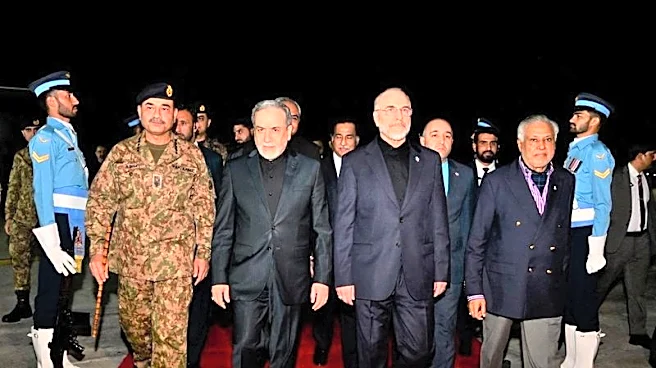
The Islamabad talks between Iranian and U.S. delegations have hit a stalemate due to conflicting preconditions and statements. President Trump posted on Truth Social, asserting that Iran has no leverage except its control over the Strait of Hormuz. Iran demands
the withdrawal of sanctions, unfreezing of assets, and recognition of its territorial rights over the Strait. The U.S. and UAE counter that the Strait is an international waterway under the UN Convention on the Law of the Sea, which Iran has not ratified. The Iranian delegation delayed its departure from Tehran, insisting on a simultaneous ceasefire in Lebanon. The situation reflects deep distrust between the parties, with Iran's Speaker of Parliament expressing skepticism about U.S. commitments. Reports suggest no direct talks occurred between the delegations, highlighting the complexity and tension surrounding the negotiations.
Why It's Important?
The stalled talks in Islamabad underscore the fragile state of U.S.-Iran relations and the broader geopolitical implications. The Strait of Hormuz is a critical chokepoint for global oil shipments, and any disruption could impact international energy markets. The U.S. aims to maintain freedom of navigation, while Iran seeks to assert control, affecting regional stability. The negotiations are crucial for easing tensions and preventing escalation, which could involve key U.S. allies like Israel and Gulf states. The outcome may influence future diplomatic strategies and military postures in the region, impacting global security and economic interests.
What's Next?
The next steps in the Islamabad talks remain uncertain, with both sides entrenched in their positions. Potential outcomes include continued diplomatic efforts to bridge gaps or increased tensions if negotiations fail. Stakeholders like the U.S., Iran, and regional allies may reassess their strategies, considering military, economic, and political dimensions. The international community will likely monitor developments closely, given the potential impact on global oil markets and regional security. Future talks may require third-party mediation or new frameworks to address underlying issues and build trust.
Beyond the Headlines
The impasse in Islamabad highlights deeper issues in U.S.-Iran relations, including historical grievances and strategic interests. Iran's distrust stems from past experiences of perceived U.S. breaches of commitments, complicating negotiations. The situation raises ethical questions about the use of economic sanctions and military threats in diplomacy. Long-term implications may include shifts in regional alliances and power dynamics, as countries navigate the complex interplay of security, sovereignty, and international law. The talks also reflect broader challenges in achieving sustainable peace and stability in the Middle East.