






What's Happening?
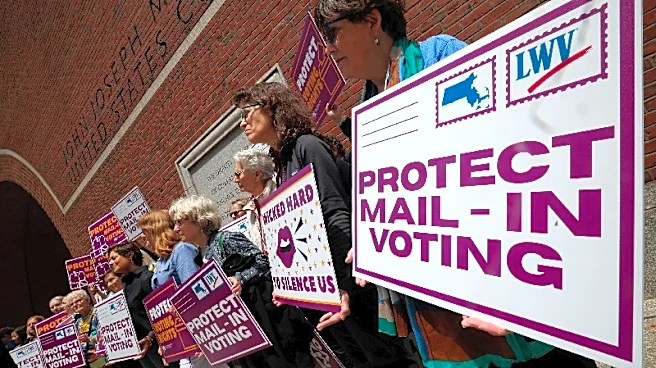
A federal judge is set to rule on whether South Dakota's Secretary of State is violating the U.S. Constitution through allegedly misleading notification letters sent to voters registered as "federal-only." The lawsuit, filed by the League of Women Voters
and a Sioux Falls resident, challenges the state's implementation of a law signed by Governor Larry Rhoden in March, which requires proof of citizenship for new voter registrations. Voters who do not provide such documentation are registered as federal-only, meaning they can only vote in federal elections. The core of the dispute revolves around the content of the notification letters, which allegedly fail to accurately explain why a voter has been designated federal-only and how they can remedy their status, citing only mail-forwarding address issues even when citizenship documentation is the cause.
Why It's Important?
This legal challenge is significant as it directly impacts voting rights and the transparency of election processes in South Dakota. If the notification letters are indeed misleading, they could disenfranchise eligible voters by failing to provide clear instructions on how to participate fully in state and local elections. The lawsuit highlights concerns about due process rights under the 14th Amendment, which requires accurate information and a means to respond to government actions affecting individuals. For organizations like the League of Women Voters, the alleged inaccuracies hinder their ability to conduct effective voter registration drives and provide accurate information to the public. The outcome of this case could set a precedent for how states communicate voter registration status and requirements, potentially influencing voter access and participation in future elections.
What's Next?
A federal judge is expected to issue a decision next week following oral arguments. If the court rules in favor of the plaintiffs, the South Dakota Secretary of State's office may be compelled to revise its notification letters to provide accurate and comprehensive information regarding federal-only voter status and the steps required to change it. This could involve creating specific letters for different reasons for federal-only designation, including citizenship documentation issues. The League of Women Voters has suggested a "simple fix" of writing new, specific notification letters. The state's lawyers have argued that the League lacks standing and that county auditors, not the Secretary of State, are responsible for voter registration, though the Secretary of State's office controls the letter content. Regardless of the ruling, this case will likely continue to fuel debate over voter access, election integrity, and the role of state agencies in informing the electorate.
Beyond the Headlines
The legal battle over South Dakota's voter notification letters delves into the broader implications of election administration and its impact on democratic participation. The requirement for proof of citizenship for voter registration, while intended to ensure election integrity, can inadvertently create barriers for eligible voters if not communicated clearly. The alleged inadequacy of the notification letters raises questions about the state's commitment to voter education and accessibility. This case underscores the delicate balance between securing elections and protecting the fundamental right to vote. It also highlights the ongoing tension between state-level election laws and federal constitutional protections. The outcome could influence how other states design their voter registration and notification processes, potentially leading to increased scrutiny of similar practices nationwide and emphasizing the importance of clear, unambiguous communication from election officials to the public.