







What's Happening?
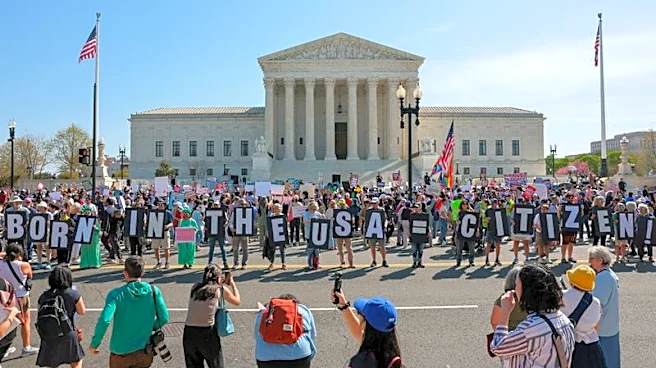
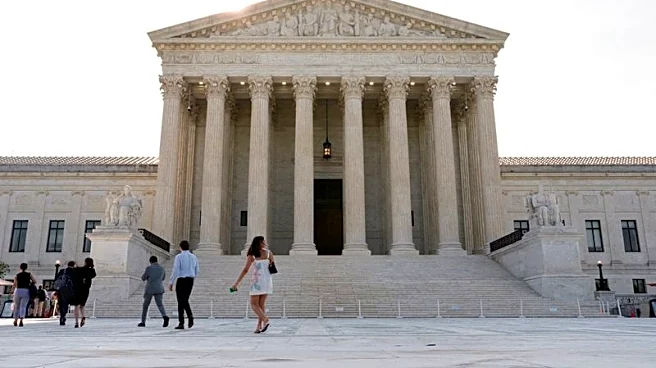
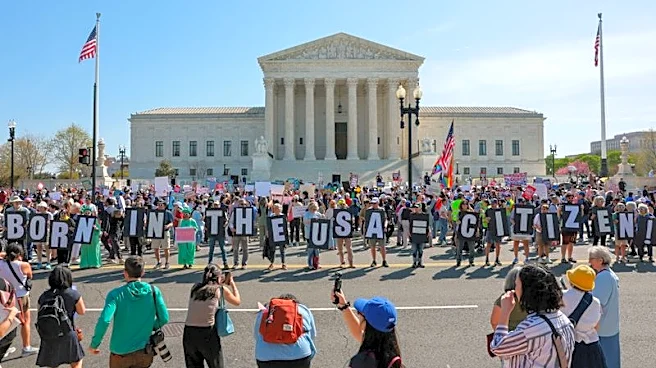
The Supreme Court has delivered a series of rulings that have both expanded and limited presidential powers, impacting President Trump's agenda. Notably, the court upheld the principle of birthright citizenship, rejecting President Trump's attempt to
alter it. Chief Justice John G. Roberts Jr. authored the majority opinion, emphasizing the constitutional basis for citizenship by birthright. The court also addressed other significant issues, such as presidential authority over agency leaders, where it allowed Trump to dismiss certain officials but blocked him from removing a Federal Reserve governor. Additionally, the court's decisions on gun rights and immigration have largely favored Trump's policies, allowing more discretion in immigration enforcement and limiting gun regulations. However, the court's ruling on election-related cases has been a mixed bag, with some decisions favoring Republican strategies while others did not align with Trump's preferences.
Why It's Important?
These rulings have significant implications for U.S. politics and governance. The affirmation of birthright citizenship maintains a long-standing constitutional principle, impacting immigration policy and the lives of many individuals. The court's stance on presidential powers reflects a nuanced approach, balancing executive authority with legislative intent. This could influence future administrations' ability to control independent agencies. The decisions on gun rights and immigration align with conservative priorities, potentially shaping national policies in these areas. The mixed outcomes in election-related cases highlight ongoing debates about voting rights and electoral fairness, with potential effects on future elections and party strategies. Overall, these rulings underscore the Supreme Court's pivotal role in interpreting constitutional boundaries and influencing public policy.
What's Next?
Looking ahead, the Supreme Court is set to address additional contentious issues, including the constitutionality of bans on semiautomatic rifles like the AR-15. This upcoming case could further define the scope of gun rights in the U.S. The court's future decisions will likely continue to impact key areas such as immigration, presidential powers, and civil rights. Stakeholders, including political leaders, advocacy groups, and the public, will closely watch these developments, as they could have far-reaching consequences for American society and governance. The balance between executive authority and legislative oversight remains a critical area of focus, with potential implications for the separation of powers and the functioning of government institutions.