



What's Happening?
Cuban President Miguel Díaz-Canel has issued a warning about the possibility of a U.S. military strike against Cuba. This statement was made during a public address in Havana, marking the anniversary of Cuba's socialist revolution. Díaz-Canel described
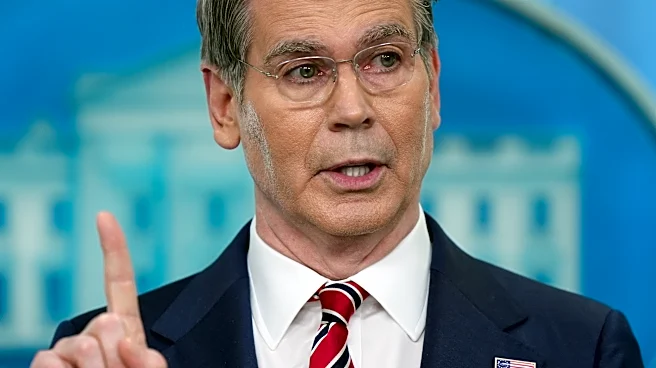
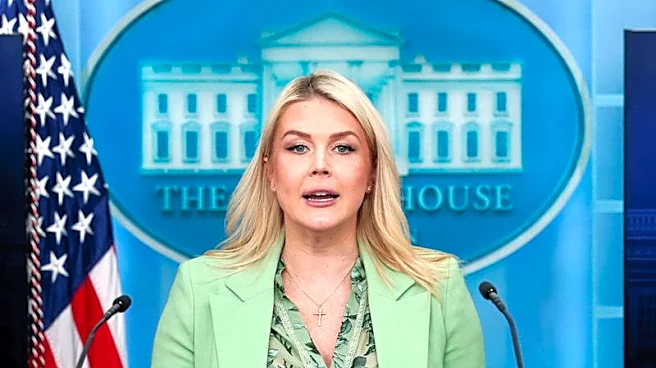
the current situation as 'absolutely challenging' and urged the nation to prepare for defense. His remarks represent a shift from general criticism of U.S. policy to explicit warnings of potential military confrontation. A White House official dismissed Cuba's leadership, suggesting the government is weakening, especially after losing support from Venezuela. Despite the warning, U.S. officials have not indicated any changes in military posture or operations, maintaining a stance of non-engagement with the threat.
Why It's Important?
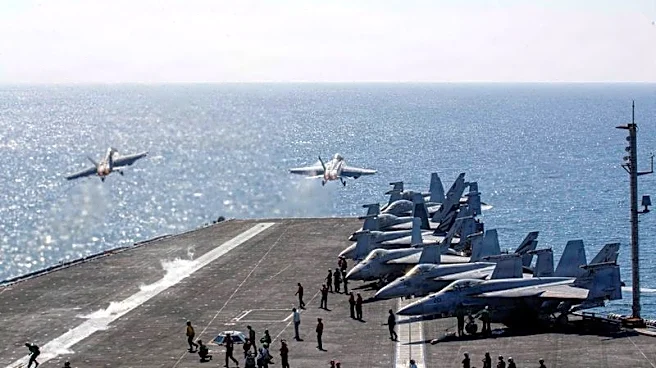
The warning from Cuba's president highlights the escalating tensions between the U.S. and Cuba, a region historically sensitive to political and military developments. The U.S. maintains a military presence in the Caribbean, including operations from Guantanamo Bay, which could be affected by any increase in hostilities. The situation is further complicated by Cuba's economic struggles and U.S. sanctions, which have been linked to rising tensions. The potential for military conflict could have significant implications for regional security, migration patterns, and diplomatic relations. The U.S. response, or lack thereof, may influence future negotiations and the stability of the region.
What's Next?
While the U.S. has not shown signs of military engagement, the situation remains fluid. Ongoing negotiations between Washington and Havana could lead to a limited agreement focused on economic issues, such as the release of political prisoners. However, if talks fail, there is a possibility of military action from the Trump administration. The rhetoric from Cuba may be intended to rally domestic support amid internal challenges, but it also signals a more dangerous phase in U.S.-Cuba relations. The potential for air strikes or targeted actions against Cuban leaders remains a concern, although a full-scale occupation appears unlikely.
Beyond the Headlines
The exchange between Cuba and the U.S. underscores the complex interplay of domestic politics and international relations. Cuba's use of external threats to bolster internal support reflects a strategy seen in other nations facing economic and political pressure. The situation also highlights the broader implications for U.S. foreign policy in Latin America, where military presence and diplomatic efforts must balance regional stability with national security interests. The potential for conflict could affect U.S. operations in the Caribbean, including counter-narcotics missions and security cooperation with partner nations.